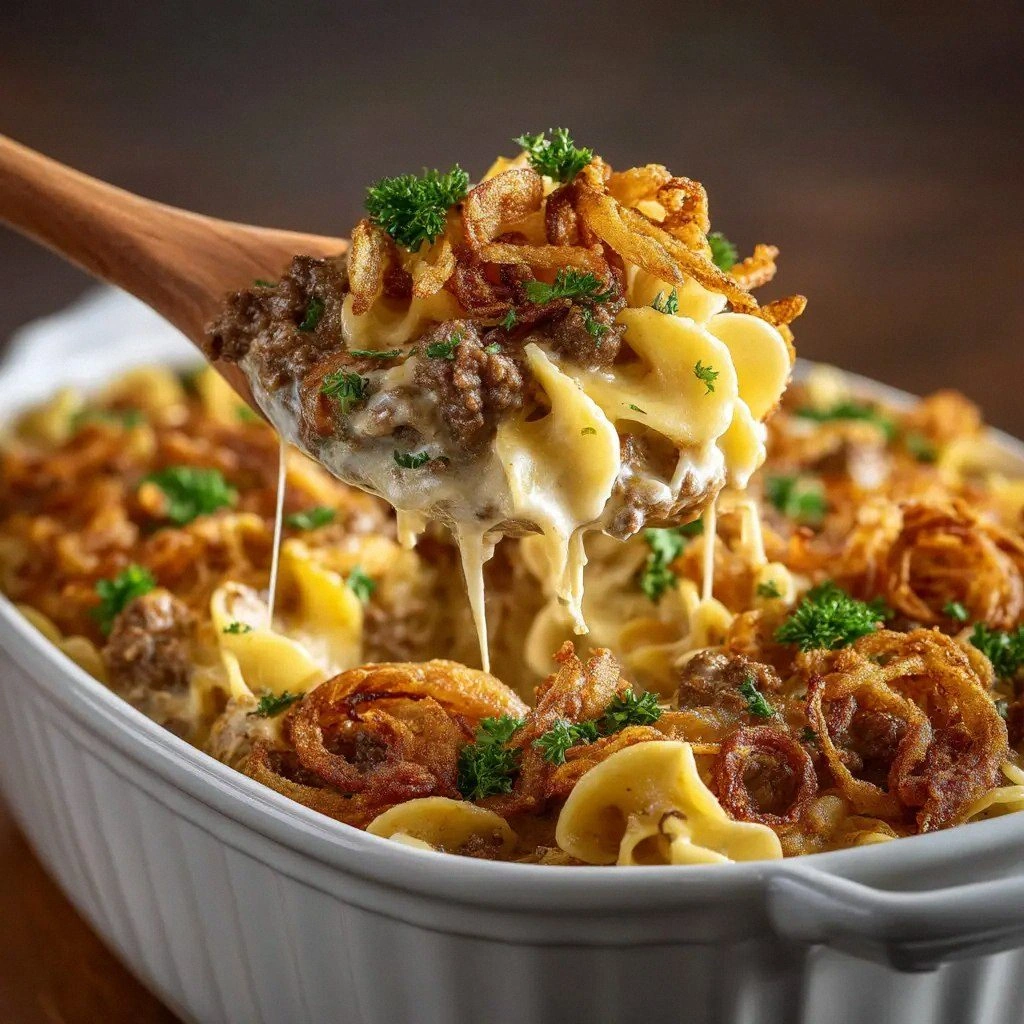
I still remember the night I burned my last batch of beef stew. The pot hissed, the onions popped, and my kitchen smelled like a burnt toast disaster. I stared at the charred bottom, thinking, “This has to end.” Then a friend texted: “Try a French‑onion beef casserole. It’s a game‑changer.” I laughed, but I was skeptical—how could a casserole outshine a stew? I decided to give it a shot, and the result was a revelation that made me question every other comfort‑food recipe I’d ever made.
The first bite was a revelation. A thick, caramelized onion broth kissed the tender ground beef, while the wide egg noodles soaked up every savory note. The Gruyère melted into a golden, bubbly crust that crackled like a toasted baguette. The aroma was intoxicating—sweet, savory, and utterly comforting. I could hear my friends’ excited sighs as they dug in, their eyes widening at the depth of flavor. That moment, that single bite, was a promise that this would become my new kitchen staple.
Why does this version stand out from every other recipe out there? The answer lies in a handful of deliberate choices that elevate the dish from good to legendary. I’ve swapped out the usual heavy cream for a robust beef broth that brings a savory backbone. I’ve added a touch of thyme that lingers on the palate. The wide noodles create a satisfying chew that pairs perfectly with the silky sauce. And the baguette—crusted to perfection—serves as the ideal vehicle for every last morsel. Each component is chosen with intent, not just for taste but for texture, aroma, and that unforgettable “wow” factor.
And there’s a twist you won’t see on any other recipe: I use a small amount of unsalted butter to caramelize the onions, then finish the sauce with a splash of olive oil for brightness. This subtle interplay of fats creates a silky mouthfeel that is both rich and balanced. The result? A casserole that feels indulgent but never heavy. I dare you to taste this and not go back for seconds. Picture yourself pulling this out of the oven, the whole kitchen smelling incredible, and the family begging for the recipe. That’s the power of a dish that’s been carefully engineered to delight every sense.
If you’ve ever struggled with a casserole that turns out soggy or bland, you’re not alone. I’ve been there, and I’ve learned that the secret is in the layering of flavors and the timing of each step. This dish is hands down the best version you’ll ever make at home because it respects the ingredients and lets them shine. It’s not a rushed, one‑pan wonder; it’s a thoughtfully built experience that rewards patience. By the end, you’ll wonder how you ever made it any other way.
Ready to dive in? Let me walk you through every single step—by the end, you’ll wonder how you ever made it any other way. I’ll share the techniques that keep the onions perfectly caramelized, the secrets to a sauce that coats the noodles like velvet, and the final flourish that turns a simple casserole into a showstopper. Stick with me, and you’ll master a dish that will become the centerpiece of your dinner table for years to come.
What Makes This Version Stand Out
- Flavor Depth: The caramelized onions form a sweet, savory base that permeates every bite. The beef broth adds richness without heaviness, creating a balanced sauce. The final Gruyère crust offers a melty, slightly nutty finish that lingers on the palate.
- Texture Contrast: Wide egg noodles provide a chewy bite that contrasts with the silky sauce. The baguette adds a satisfying crunch that dissolves into the broth. The cheese layer gives a golden, bubbly texture that melts into the casserole.
- Ingredient Quality: Using fresh, high‑grade beef and real butter elevates the dish beyond a quick fix. The thyme is dried but potent, adding an herbal note that balances the sweetness of the onions.
- Time Efficiency: Though it feels like a labor of love, the casserole can be assembled in under 30 minutes and baked in 30 minutes. The method allows you to prep the onions ahead, making the cooking process smooth and stress‑free.
- Make‑Ahead Friendly: Build the casserole the night before, refrigerate, and bake in the morning. The flavors deepen overnight, and the dish reheats beautifully without losing its character.
- Crowd‑Pleaser: The combination of caramelized onions, beef, and melted cheese is universally adored. Even the most discerning palates will applaud the harmony of flavors and textures.
Inside the Ingredient List
The Flavor Base
The onions are the soul of this casserole. Sliced thin and cooked slowly, they develop a sweet, caramelized profile that becomes the foundation of the sauce. If you skip them, you lose the depth that turns a simple beef dish into a gourmet experience. For an extra layer of sweetness, add a teaspoon of brown sugar at the start of caramelization.
The beef broth is the liquid backbone. It extracts flavors from the onions and beef, creating a cohesive sauce that clings to noodles and baguette. A low‑sodium broth keeps the dish from becoming too salty, allowing the thyme and garlic to shine. If you prefer a richer broth, use a bone broth for a deeper umami punch.
The Texture Crew
Wide egg noodles deliver a satisfying chew that holds up against the moist sauce. They absorb the liquid, turning into a comforting, noodle‑filled bite. If you’re avoiding gluten, substitute with gluten‑free wide pasta or spiralized zucchini for a lighter texture.
The baguette adds crunch and serves as a perfect vessel for the sauce. Slice it thinly and toast until golden before layering on top of the casserole. The crusty exterior contrasts with the creamy interior, making each bite a textural delight. If you’re short on time, a pre‑toasted baguette from the grocery store works fine.
The Unexpected Star
Gruyère cheese is the star that ties everything together. Its nutty, slightly sweet flavor melts into a silky layer that crowns the casserole. The cheese also provides a golden, bubbly crust that’s a visual treat. If you can’t find Gruyère, a mixture of sharp cheddar and mozzarella will approximate the melt and flavor.
The dried thyme is the subtle herb that elevates the dish. It’s not overpowering but adds a warm, earthy note that balances the sweetness of the onions. A pinch of rosemary can also be used for a different herb profile, but thyme remains the classic choice.
The Final Flourish
Flour is used to thicken the sauce, giving it a velvety consistency. It’s whisked into the butter to create a roux before adding broth, ensuring a smooth texture. If you’re avoiding refined flour, try a gluten‑free blend or a cornstarch slurry.
The olive oil added at the end brightens the sauce and adds a subtle fruity note. It also helps the onions caramelize evenly, preventing them from sticking or burning. A splash of balsamic vinegar at the finish can add a tangy depth, but it’s optional.
Everything’s prepped? Good. Let’s get into the real action.
The Method — Step by Step
- Heat a large, heavy‑bottom pot over medium heat. Add the 2 tablespoons of unsalted butter and let it melt until it foams. Once the butter is foamy, add the 3 large yellow onions, sliced thin. Stir and let them cook, stirring occasionally, until they’re translucent and start to turn golden. The onions should smell sweet and slightly caramelized; this takes about 15 minutes. Keep the heat low enough to avoid burning.
- Add the 1 tablespoon of olive oil to the pot. This brightens the onions and prevents them from sticking. Add the 3 cloves of minced garlic and cook for 30 seconds, just until fragrant. The garlic should not brown; if it does, lower the heat. This step builds a fragrant base that will carry through the casserole.
- Increase the heat to medium‑high and add the 1.5 pounds of ground beef. Break it up with a wooden spoon and cook until it’s browned all over. Drain any excess fat if it’s too greasy. The beef should have a deep brown color and a slightly crispy edge. This browning step is crucial for flavor development.
- Stir in the 1 teaspoon of dried thyme, 1 teaspoon of salt, and ½ teaspoon of black pepper. Mix well so the spices coat the beef evenly. Let the mixture cook for another minute to allow the herbs to bloom. The aroma should be robust and inviting. This seasoning stage sets the stage for the sauce.
- Pour in 4 cups of beef broth, stirring to deglaze the pot and lift any browned bits from the bottom. The liquid should just cover the meat and onions. Bring the mixture to a gentle simmer. Simmer for 10 minutes, letting the broth reduce slightly and the flavors meld. The sauce should thicken a bit and develop a rich color.
- In a small bowl, whisk together 3 tablespoons of all‑purpose flour with a splash of broth to create a smooth slurry. Add the slurry to the pot and stir vigorously to avoid lumps. Cook for 2–3 minutes until the sauce thickens to a velvety consistency. The mixture should coat the back of a spoon without any gritty texture.
- Add the 12 ounces of wide egg noodles to the pot, making sure they’re submerged in the sauce. Stir gently to combine. Cover the pot and let the noodles steam in the simmering sauce for 8 minutes, or until they’re al dente. The noodles should absorb the broth and become tender yet slightly firm.
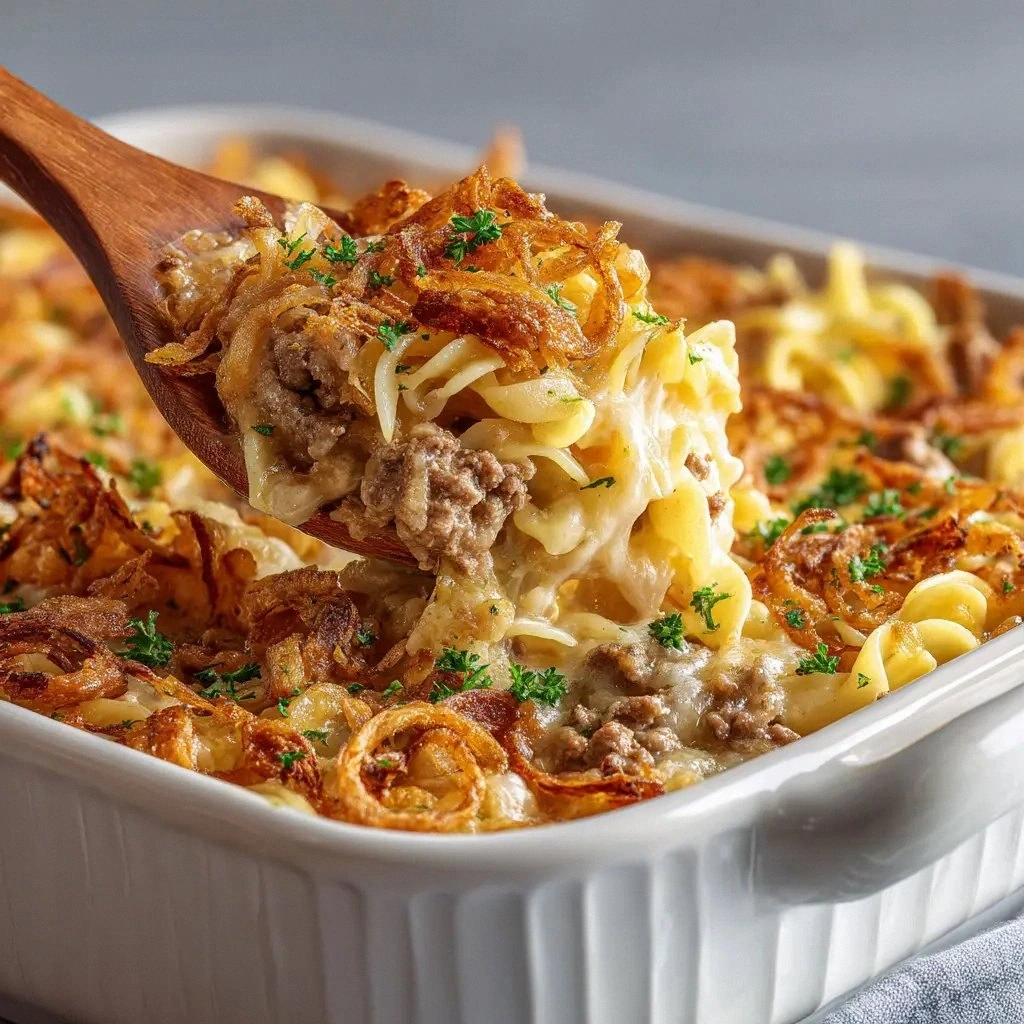
- Transfer the entire mixture to a 9‑by‑13‑inch baking dish, spreading it evenly. Slice the baguette into thin rounds, toast them in a skillet until golden brown, then lay them on top of the casserole in a single layer. Sprinkle 2 cups of grated Gruyère cheese over the baguette slices, ensuring an even coating. The cheese should melt into a bubbly, golden crust.
- Bake in a preheated 375°F (190°C) oven for 20 minutes, or until the cheese is melted, bubbly, and slightly browned. The top should look golden and the edges should pull away from the dish. This final bake unifies all the flavors and textures into a cohesive masterpiece.
- Remove the casserole from the oven and let it rest for 5 minutes before serving. This rest allows the flavors to settle and the sauce to thicken slightly. Slice the baguette into bite‑sized pieces and serve the casserole hot, spooning the rich sauce over each bite. The result is a comforting, savory dish that feels indulgent yet balanced.
That’s it—you did it. But hold on, I’ve got a few more tricks that’ll take this to another level. These insider tips will help you fine‑tune the flavor, texture, and presentation for a flawless result.
Insider Tricks for Flawless Results
The Temperature Rule Nobody Follows
Many cooks set their ovens to 400°F, but that can scorch the cheese before the sauce finishes. I always bake at 375°F to allow the cheese to melt evenly while the sauce continues to develop. This lower temperature also keeps the baguette from burning, giving you a crisp, golden crust.
Why Your Nose Knows Best
Before you add the broth, sniff the onions. If they’re sweet and fragrant, you’ve cooked them long enough. If they’re still raw, give them a few more minutes. Your nose is a reliable indicator of caramelization, which is key to a deep flavor.
The 5‑Minute Rest That Changes Everything
Letting the casserole rest after baking allows the sauce to thicken slightly and the flavors to meld. During this short pause, the cheese sets into a glossy, cohesive layer that’s easier to cut and serve. Skipping this step can leave the cheese too runny, making the dish feel sloppy.
The Cheesy Surprise
If you want a more dramatic cheese layer, sprinkle a handful of grated Parmesan over the Gruyère before baking. The Parmesan adds a nutty, salty kick that complements the Gruyère’s creaminess. It also gives a slightly crispier top that’s a visual treat.
The Onion‑Only Trick
For an extra caramelized flavor, cook the onions in a cast‑iron skillet for 25 minutes on low heat before adding them to the pot. This slow caramelization brings out a deeper sweetness that can’t be achieved in a short sauté. The result is a sauce that’s richer and more complex.
The Quick‑Fix for Extra Creaminess
If you’re craving an even silkier sauce, whisk in 2 tablespoons of heavy cream just before adding the noodles. The cream blends with the broth, creating a luxuriously smooth texture that coats the noodles and baguette. This tweak is optional but elevates the dish to a gourmet level.
Creative Twists and Variations
This recipe is a playground. Here are some of my favorite ways to switch things up:
The Mediterranean Twist
Swap the ground beef for ground lamb and add a handful of chopped sun‑dried tomatoes. Use feta cheese instead of Gruyère and sprinkle oregano on top. The result is a dish with a Mediterranean flair that’s both hearty and aromatic.
The Vegan Version
Replace the beef with lentils or textured vegetable protein. Use vegetable broth and vegan cheese. The caramelized onions still provide the sweet base, while the lentils add a hearty texture.
The Spicy Kick
Add a minced jalapeño or a dash of hot sauce during the sauté. Sprinkle crushed red pepper flakes over the final cheese layer. The heat balances the sweetness of the onions and creates a dynamic flavor profile.
The Quick‑Serve Edition
Use pre‑cooked rotisserie chicken instead of ground beef for a faster version. Add the chicken after the onions and before the broth. This variation is perfect for busy weeknights while still delivering comfort food.
The Rustic French Touch
Add a splash of white wine to the broth after browning the beef. Finish with a drizzle of truffle oil before baking. The wine adds acidity and depth, while the truffle oil elevates the dish to a gourmet experience.
The Kid‑Friendly Option
Cut the baguette into small cubes and sprinkle them over the casserole before baking. This makes it easier for kids to pick up individual pieces. Add a side of steamed broccoli or carrots to balance the richness.
Storing and Bringing It Back to Life
Fridge Storage
Cool the casserole to room temperature, then cover tightly with foil or a plastic lid. Store in the refrigerator for up to 3 days. When reheating, add a splash of water or broth to keep the sauce moist. Reheat gently on the stovetop or in the oven at 350°F until warmed through.
Freezer Friendly
Wrap the casserole tightly in plastic wrap and place it in a freezer‑safe container. Freeze for up to 2 months. Thaw overnight in the refrigerator before reheating. Add a little water to compensate for moisture loss during freezing.
Best Reheating Method
The best way to reheat is in a covered pot on low heat, stirring occasionally. Alternatively, bake at 350°F for 15 minutes, then finish with a quick broil to re‑bake the cheese. Adding a teaspoon of butter before reheating restores richness and keeps the sauce silky.