I burned the first batch of this soup so badly that the smoke alarm serenaded the entire apartment building at 2 a.m. on a Tuesday. My neighbor, a retired Greek grandmother, knocked on my door in her hairnet, holding a wooden spoon like a scepter and declaring, "You need better olive oil and more patience, paidi mou." She marched in, took one look at my scorched pot, and whispered the secret that changed everything: toast the pearl couscous separately until it smells like warm hazelnuts, then add it at the very end so it stays plump and springy instead of dissolving into wallpaper paste. That tiny pivot transformed my disaster into what is now, hands down, the most addictive chicken soup I've ever spooned.
Picture this: it's raining sideways outside, your hoodie smells like wet dog, and you want something that hugs you from the inside out without putting you in a carb coma. This Greek Chicken Pearl Couscous Soup is that hug, but it's also a bright slap of sunshine. We're talking silky lemon-kissed broth, chicken so tender it practically waves back at you, and those little couscous pearls that pop like caviar between your teeth. The feta melts into salty freckles, dill drifts on top like green confetti, and every spoonful tastes like you booked a last-minute flight to Santorini and didn't have to endure airport security.
Most recipes treat pearl couscous like a throw-and-forget pasta, dumping it straight into the pot to swell into oblivion. That approach gives you soup that eats like porridge and a broth that tastes like cloudy dishwater. The fix is stupidly simple yet nobody does it: cook the couscous like risotto in its own mini-pan with olive oil and a whisper of garlic until the edges turn golden, then park it on the bench until the soup is ready. When you marry the two at the table, the couscous keeps its backbone and the broth stays crystal bright. I dare you to taste this method once and not swear off the old way forever.
Okay, ready for the game-changer? We're also going to treat the chicken like VIP royalty instead of rubbery afterthoughts. Instead of boiling it into cottony oblivion, you'll sear seasoned breasts until they're bronzed and smoky, let them nap while the vegetables build their flavor, then slip the sliced meat back in right before serving so every cube stays juicy. That sizzle when the chicken hits the hot oil? Absolute perfection. Let me walk you through every single step — by the end, you'll wonder how you ever made it any other way.
What Makes This Version Stand Out
Lemon Explosion: Both zest and juice go in at two separate stages, giving you layered brightness instead of a one-note tart punch that makes your jaw ache. The zest steeps in the hot broth for floral perfume, then fresh juice wakes everything up at the finish like citrus confetti.
Texture Tango: Pearl couscous stays bouncy because we cook it al dente separately, while carrots keep a slight snap, and feta melts into creamy pockets. Every spoonful is a surprise party of soft, chewy, and silky.
One-Pot Wonder Lie: Technically two pans, but the second is just a little skillet for the couscous. Dirty-dish haters can still finish with minimal cleanup and zero chaos.
Weeknight Lightning: From fridge to table in 45 minutes flat, including the time it takes to hunt for that lost bay leaf in the drawer. Faster than delivery and you don't have to put on real pants.
Leftover Glow-Up: The flavors meld overnight so tomorrow's lunch tastes like you planned it 24 hours ahead, which makes you look annoyingly competent to coworkers.
Pantry Flexibility: No dill? Use mint. No feta? Try ricotta salata. Vegetarian? Swap chickpeas for chicken and vegetable stock. The template is forgiving, but the soul stays Greek.
Crowd Hypnosis: I once served this at a book club where nobody discussed the book because they were too busy monopolizing the ladle. Bring a double batch or risk a riot.
Inside the Ingredient List
The Flavor Base
Yellow onion is the reliable best friend who shows up early and stays late, releasing sugars that caramelize gently in olive oil and create the savory undercurrent that carries every other flavor. Skip the onion and the whole soup tastes like it forgot its wallet at home — technically functional but awkward and flat. If you only have red onion, go ahead, but expect a sharper personality that will elbow everything else out of the way. Dice it small so it melts into the broth rather than floating around like chewy icebergs.
Garlic goes in after the onion has gone translucent because garlic burns faster than gossip spreads in a small town. You want it fragrant and blonde, not bitter and brown, so keep the heat medium and your spatula moving like you're conducting a tiny orchestra. Three fat cloves is non-negotiable; vampires are not invited to this party. Smash and mince, don't press, because pressed garlic turns sulfurous and angry.
Chicken stock is the ocean your ingredients swim in, so use the best you can find or, better yet, the homemade stuff lurking in your freezer. Low-sodium is key here because feta will bring the salt brigade later, and you want to taste the lemon, not just lick a salt lick. Warm stock deglazes the pot and lifts those gorgeous browned chicken bits into liquid gold. Cold stock straight from the carton shocks the vegetables and stalls the symphony, so microwave it for 90 seconds first.
The Texture Crew
Pearl couscous, also called Israeli couscous, looks like tiny pasta planets and behaves like risotto rice if you treat it right. Buy the plain toasted variety, not the pre-seasoned boxes that taste like cardboard confetti. The grains should feel slick and dusty, not chalky or broken. Store leftovers in a jar so you can shake out what you need without dumping half the bag between the counter and your soul.
Carrots bring candy-sweetness and color contrast, but only if you cut them into tiny half-moons that cook in five minutes. Big carrot coins will still be crunchy when everything else is ready, and nobody wants to wrestle a vegetable discus while they're trying to feel cozy. Peel them first because the skin stays stubbornly tough even in hot broth. If your carrots have tops, chop a tablespoon of the feathery greens and toss them in with the dill for double carrot power.
Celery adds a green, slightly bitter backbone that keeps the soup from tipping into dessert territory. Slice it thin so it releases its aromatic oils quickly, but leave a few leaves on because they look like tiny green butterflies floating on the surface. If celery makes you sad, swap in fennel bulb for a licorice twist that plays shockingly well with lemon.
The Unexpected Star
Lemon zest contains essential oils that taste like sunshine captured in a microplane. Use an unwaxed lemon if possible, and zest only the yellow skin, not the bitter white pith that tastes like regret. Add zest early so it can bloom in the heat, but save the juice for the final minute so the bright, volatile acids don't cook off into blandness. Roll the lemon on the counter before juicing to break the vesicles and extract every last drop of liquid gold.
Feta cheese should come in a brine bath, not pre-crumbled, because the crumbles are coated with anti-caking starch that turns gluey in hot soup. Buy the block, rinse off the brine, and crumble it yourself so you get snowy nuggets that soften into creamy pockets rather than rubbery erasers. If you can find Greek sheep's milk feta, the flavor is tangy and grassy rather than mouth-puckering salty. Vegans can substitute a spoonful of white miso for the umami punch, though you'll lose the creamy melt.
The Final Flourish
Fresh dill looks like feathery green confetti and tastes like spring incarnate. Dried dill is a dusty ghost of its former self, so skip it or substitute fresh parsley or mint if you must. Add dill off the heat so the fronds stay vivid; cooking them turns the color army-khaki and the flavor muddy. Save a few sprigs for the table so people can customize their bowl like a salad bar for soup.
Bay leaf is the stealth bomber of herbs: you don't notice it when it's there, but you definitely miss it when it's gone. One dried leaf is enough; two will make the broth taste like cafeteria stew. Remove before serving because chomping into a bay leaf feels like eating a razor blade made of paper. If you have fresh bay, use half a leaf and bask in the subtle eucalyptus aroma.
Everything's prepped? Good. Let's get into the real action...
The Method — Step by Step
- Pat the chicken breasts dry with paper towels like you're blotting lipstick; moisture is the enemy of that gorgeous sear we're chasing. Season both sides generously with salt, cracked pepper, and a whisper of dried oregano — think sunbathing on a Mykonos beach, not breaded cutlet. Heat a heavy-bottomed pot over medium-high until a drop of water skitters across the surface like it's late for a meeting. Add olive oil, wait for the shimmer, then lay the chicken down away from you so it doesn't splash and leave polka-dot burns on your forearms. Let it cook undisturbed for five minutes; the edges will turn opaque and the underside will develop a caramel crust that smells like Sunday roast. Flip, sear the second side for three minutes, then transfer to a plate to rest — the carry-over cooking finishes the job while we build the flavor base.
- In the same pot, drop the heat to medium and add another swirl of olive oil plus the diced onion. Stir with a wooden spoon, scraping up those sticky golden chicken bits — that's pure umami concentrate that will give the broth soul. When the onion turns translucent and starts to sweet-talk your nose, toss in the carrots and celery. Cook for four minutes, stirring occasionally, until the vegetables sweat and the carrot edges blush orange. Add garlic, stir for thirty seconds, then clear a little circle in the center and bloom the dried oregano by letting it toast for fifteen seconds before mixing everything together. Your kitchen should smell like a Greek taverna at sunset.
- Pour in the warm chicken stock while the pot is still hot; the liquid will hiss and lift every last flavor fossil off the bottom. Drop in the bay leaf, bring to a gentle simmer, and let it bubble softly for ten minutes so the herbs can steep like tea. Meanwhile, start the couscous in a small skillet: heat olive oil over medium, add the dry pearls, and stir constantly for three minutes until they turn golden and start to clack against the pan like marbles. Add a ladle of stock, cover, and cook on low for six minutes until the liquid is absorbed and the couscous is al dente. Remove from heat and fluff with a fork so the grains stay separate and proud.
- Slice the rested chicken into generous bite-size cubes; the center should be juicy and barely blushing. Slide the meat back into the simmering broth and let it swim for two minutes so the flavors meld but the chicken doesn't dry out. Stir in half the lemon zest and squeeze in half the juice, then taste. The broth should sing with citrus but not pucker like a Warhead candy. Add salt gradually; remember the feta is waiting in the wings with its own salty solo.
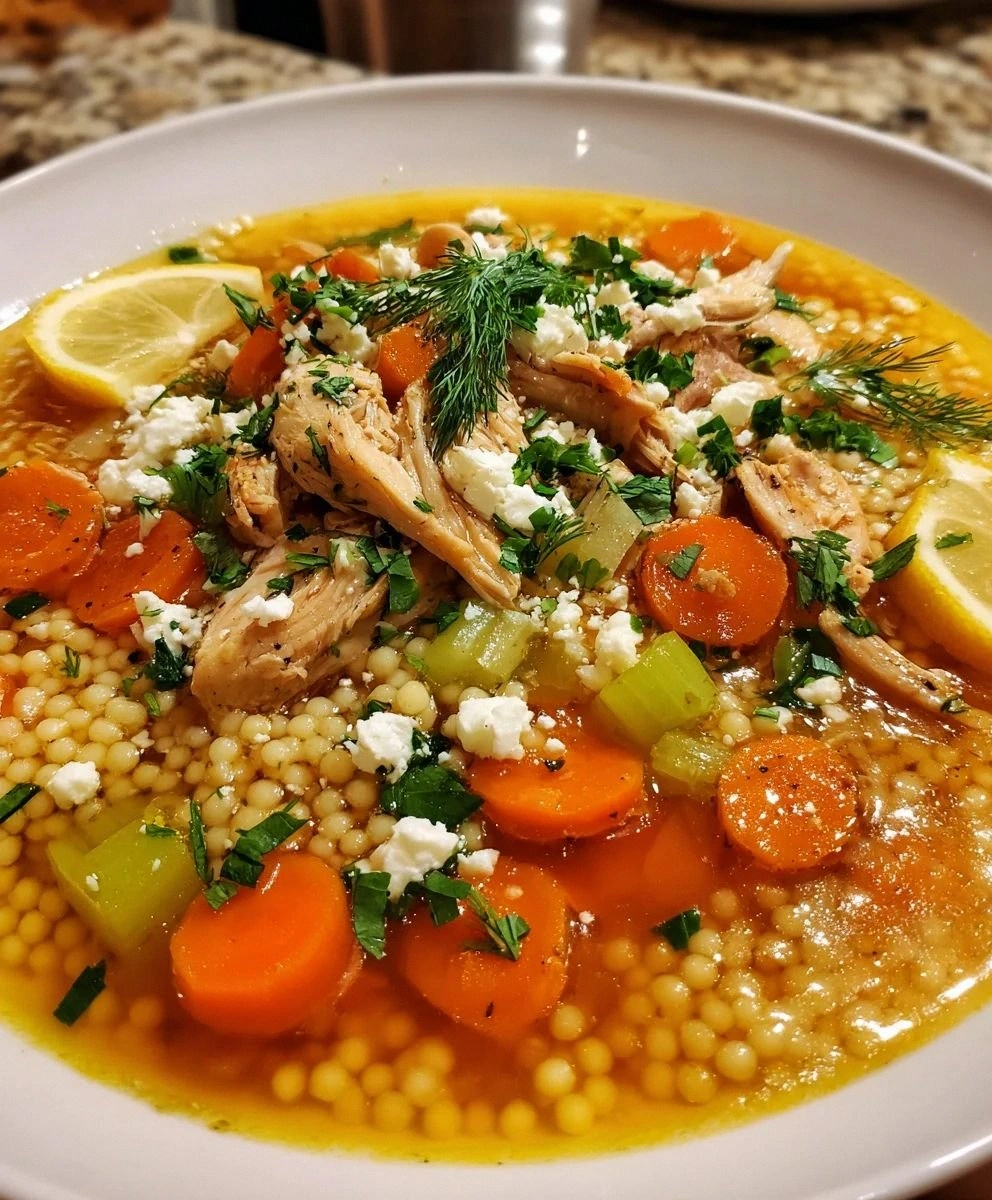
- Now the fun part: add the cooked pearl couscous to each bowl, not the pot. This keeps the broth silky and prevents the pasta from hogging all the liquid like a greedy sponge. Ladle the hot soup over the couscous, then crown with crumbled feta, a shower of fresh dill, and the remaining lemon zest. Serve with lemon wedges on the side so everyone can adjust the brightness to their own mood. The first spoonful should taste like Aegean sunshine breaking through storm clouds.
- Let the soup rest off the heat for five minutes before serving — this brief pause lets the flavors mingle and the temperature drop to that sweet spot where you can taste everything without searing your tongue. Garnish just before bringing bowls to the table so the dill stays Technicolor green and the feta retains a few unmelted nuggets for textural contrast. Serve with crusty sourdough for swiping the bowl clean, or go full Greek and add a side of warm pita triangles brushed with olive oil and oregano. If you're cooking for a crowd, set up a toppings bar with extra feta, dill, chili flakes, and a tiny pitcher of olive oil so everyone can build their own edible postcard.
That's it — you did it. But hold on, I've got a few more tricks that'll take this to another level...
Insider Tricks for Flawless Results
The Temperature Rule Nobody Follows
Keep the soup at the laziest simmer you can manage — just a bubble burp every few seconds. Anything more violent and the chicken fibers seize up like over-tightened violin strings, turning your tender cubes into chewy pencil erasers. If you see rolling action, crack the lid and drop the heat so low you can count the bubbles. Your patience will be rewarded with spoon-shreddably soft chicken that tastes like it took a spa day.
Why Your Nose Knows Best
When the onions hit the pot, close your eyes and inhale. You should smell sweet, mellow perfume, not sharp sulfur. If it's acrid, your heat is too high and the sugars are burning instead of caramelizing. Adjust immediately; this is your early warning system before bitterness takes up permanent residence in your broth. Trust the sniff test — it's saved more soups than any timer.
The 5-Minute Rest That Changes Everything
After cooking, let the soup sit with the lid slightly ajar for five minutes before ladling. This micro-vacation allows the fat to rise and the broth to clarify, giving you a cleaner, more elegant bowl. Meanwhile, the couscous finishes drinking any residual stock so each pearl swells to perfect al dente without hogging the spotlight. Skip this step and you'll serve cloudy soup that tastes rushed — and your guests will sense it.
Feta Crumble Strategy
Crush the feta between your fingers into irregular pebbles rather than uniform crumbs. Those varied sizes create pockets of creaminess and tiny salty bursts, so every bite is a surprise. If the feta is too wet, pat it dry first or it will dissolve into chalky streaks. And please, for the love of Zeus, don't buy fat-free — it melts like plastic and tastes like sadness.
Dill Stem Wisdom
Use the tender upper stems in the soup for cooking, but save the feathery fronds for garnish. The stems have more flavor and won't wilt into khaki strings. Chop them finely so they disappear into the broth, then shower the pretty fronds on top for that Instagram-worthy pop of green. Your future self will thank you when the leftovers still look vibrant tomorrow.
Creative Twists and Variations
This recipe is a playground. Here are some of my favorite ways to switch things up:
Summer Garden Edition
Swap the carrots for diced zucchini and yellow squash, add a handful of cherry tomatoes at the very end so they burst into sweet pockets, and replace the dill with fresh basil. The result tastes like you've captured July in a bowl and can be served lukewarm on steamy nights when hot soup feels like a punishment.
Spicy Santorini
Add a sliced fresh chili or a teaspoon of Aleppo pepper with the garlic for a gentle, fruity heat that blooms across your tongue. Finish with a drizzle of chili oil and a sprinkle of toasted sesame seeds for a Greek-Asian mash-up that sounds weird but tastes like vacation rebellion.
Creamy Dreamy
Stir in a splash of heavy cream or coconut milk right at the end for a rich, velvety broth that coats the couscous like silk. Reduce the lemon juice by half so the dairy doesn't curdle, and finish with smoked paprika for a sunset hue that looks straight out of a taverna overlooking the caldera.
Seafood Swap
Replace the chicken with shrimp or bay scallops — sear them quickly in garlic butter, then add them back just before serving so they stay plump and sweet. A pinch of saffron in the broth turns the whole thing golden and luxurious, like eating treasure from Poseidon's pantry.
Vegan Hero
Skip the chicken and use chickpeas plus a strip of kombu seaweed in the stock for umami depth. Finish with a swirl of tahini thinned with lemon juice for creaminess and a sprinkle of nutritional yeast for cheesy vibes that won't offend your plant-based soul.
Leftover Makeover
Stir in shredded rotisserie chicken and a handful of baby spinach at the end for a lightning-fast weeknight revival that tastes intentional, not desperate. Add a splash of white wine for sophistication and pretend you planned it all along.
Storing and Bringing It Back to Life
Fridge Storage
Cool the soup completely before transferring to airtight containers; hot soup in a sealed box is a bacteria spa. Keep the couscous in a separate jar so it doesn't keep drinking the broth and turn into a solid mass that could double as paperweight. Everything stays fresh for up to four days, though the dill will darken after 48 hours. If you're meal-prepping, add fresh herbs only to the portions you'll eat that day.
Freezer Friendly
Freeze the broth and chicken in pint containers, leaving an inch of headspace for expansion, but do not freeze the couscous — it turns into pebbly sadness upon thawing. Label with blue painter's tape and a Sharpie because future you will not remember what mystery block is lurking behind the frozen peas. Thaw overnight in the fridge, then reheat gently and cook fresh couscous while the soup warms. You'll think you made it from scratch on a Tuesday night, and your smugness will be completely justified.
Best Reheating Method
Reheat in a small saucepan over low heat, adding a splash of water or stock to loosen the broth back to its original silkiness. Microwave works in a pinch, but cover loosely and use 50% power so the chicken doesn't seize up like a gym sock. Once hot, freshen with a squeeze of lemon, a crumble of new feta, and a flutter of fresh dill so it tastes bright instead of tired. Your lunch companions will assume you whipped up a fresh batch, and we will never tell them otherwise.