I still remember the first time I tasted authentic Thai coconut soup in a tiny Bangkok alleyway. The ceramic bowl arrived steaming, fragrant with lemongrass and galangal, the creamy coconut broth shimmering under the neon lights. One spoonful and I was transported—this wasn't the sad, watery takeout version I'd endured back home. This was liquid velvet, a perfect balance of creamy, spicy, sour, and sweet that danced across my tongue like a well-rehearsed ballet. I spent the next three days hunting down every street vendor version I could find, scribbling notes on napkins, pestering cooks for their secrets, and generally making a nuisance of myself in the name of culinary research.
Fast forward through three failed attempts, two volcanic chili mishaps, and one unfortunate incident involving a blender without a lid (pro tip: never blend hot soup while distracted). I finally cracked the code. This isn't just another coconut soup recipe—this is the culmination of obsessive testing, midnight phone calls to Thai grandmothers, and enough coconut milk to float a small boat. The secret lies in building layers of flavor that most recipes skip entirely, treating aromatics like disposable garnish rather than the backbone of the dish. I dare you to taste this and not go back for thirds, because seconds are guaranteed.
Here's what drives me absolutely bonkers about most "Thai" coconut soup recipes floating around the internet: they treat this masterpiece like coconut milk with a sad parade of vegetables thrown in. They forget that real tom kha gai (that's the proper name, by the way) should taste like Thailand captured in a bowl—lemongrass that perfumes the air, galangal that adds a piney citrus note you can't quite place, and that magical moment when fish sauce transforms from "why does my kitchen smell like a fishing boat" to "how is this so incredibly delicious?" Most recipes get this completely wrong, treating these ingredients like optional extras rather than essential cast members.
Picture yourself pulling this together on a rainy Tuesday evening, the whole kitchen filling with aromas that make your neighbors jealous. The coconut milk swirls into the broth like liquid silk, carrying with it the essence of lemongrass and kaffir lime leaves that you've bruised just enough to release their oils. That sizzle when the aromatics hit the pot? Absolute perfection. Stay with me here—this is worth it. Let me walk you through every single step—by the end, you'll wonder how you ever made it any other way.
What Makes This Version Stand Out
- Restaurant-Quality Depth: Most home versions taste flat because they dump everything in at once. This builds flavor in layers, starting with a proper curry paste that blooms in hot oil before the coconut milk even enters the chat. The result? A complexity that usually requires a Thai grandmother's lifetime of experience.
- The Perfect Heat Level: Thai food should make you sweat gently, not send you running for milk. This recipe uses a two-stage chili approach—fresh chilies for brightness and chili oil for lingering heat that builds rather than bludgeons.
- Silky Texture Without Gimmicks: No cornstarch slurries or heavy cream here. The secret lies in using full-fat coconut milk (never the light stuff) and adding it at precisely the right moment so it doesn't break or curdle.
- Authentic Ingredients, Accessible Sources: I've tracked down substitutions that maintain authenticity without requiring a specialty store pilgrimage. Can't find galangal? I've got you covered with a ginger-lime combo that fools even Thai food enthusiasts.
- Make-Ahead Magic: This soup actually improves overnight as the flavors meld, making it perfect for dinner parties or meal prep. The trick is storing components separately and combining just before serving.
- Customizable Protein: Traditional recipes lock you into chicken, but this version works beautifully with shrimp, tofu, or even mushrooms for a vegetarian version that doesn't feel like a sad compromise.
Alright, let's break down exactly what goes into this masterpiece...
Inside the Ingredient List
The Flavor Foundation
Lemongrass isn't just a pretty stalk—it's the backbone of authentic Thai cooking, adding a bright, citrusy note that tastes like sunshine bottled. Look for stalks that feel heavy for their size and snap cleanly when bent. The lower white and pale yellow parts contain the most flavor, so don't be tempted to use the tough green tops. If you can't find fresh, frozen lemongrass paste works in a pinch, but fresh will make you want to write poetry about soup. Skip the dried stuff entirely—it's about as flavorful as cardboard that's been left in the rain.
Galangal might look like ginger's awkward cousin, but its flavor is completely unique—piney, peppery, with hints of citrus that make regular ginger taste one-dimensional by comparison. Fresh galangal should feel firm and snap cleanly, revealing a pale interior with a pinkish tinge. If your Asian market is out, combine fresh ginger with lime zest in a 3:1 ratio for a surprisingly convincing substitute. Dried galangal is useless here—it loses all its complexity and leaves you with dusty, bitter disappointment.
Kaffir lime leaves are the secret weapon that makes Thai food taste unmistakably Thai. These double-lobed leaves pack an intense citrus aroma that's more perfume than fruit. Fresh leaves freeze beautifully, so buy a bunch when you find them and stash them for soup emergencies. Dried leaves are better than nothing, but they lose about 40% of their aromatic oils. In a real pinch, combine regular lime zest with a bay leaf for a passable approximation.
The Texture Crew
Full-fat coconut milk isn't negotiable here—light coconut milk is basically coconut water with delusions of grandeur. Shake the can vigorously before opening, or better yet, pour it into a bowl and whisk to redistribute the cream. The first pressing (usually labeled "coconut cream") is too rich for this soup, while the third pressing is too thin. Look for brands that contain only coconut and water, avoiding those with guar gum which can give your soup a slimy texture.
Mushrooms aren't just filler—they provide an earthy contrast to the bright aromatics and absorb flavors like tiny flavor sponges. Straw mushrooms are traditional, but oyster mushrooms or even regular button mushrooms work beautifully. The key is slicing them thick enough to maintain texture after simmering. If your mushrooms release a ton of liquid when they hit the pot, don't panic—just crank the heat and let it evaporate before moving to the next step.
The Protein Powerhouses
Chicken thighs trump breasts every single time here—they stay juicy even if you accidentally overcook them, and their richer flavor stands up to the bold broth. Cut them into bite-sized pieces against the grain for maximum tenderness. If you're using breast meat, please promise me you'll watch it like a hawk and pull it the moment it hits 165°F. Nobody likes stringy chicken floating in their beautiful soup.
Shrimp brings a sweet, briny note that plays beautifully with coconut milk, transforming the soup into something that tastes like a beach vacation. Use large shrimp, peeled and deveined, and whatever you do, don't overcook them—they go from perfect to rubber faster than you can say "takeout." The trick is adding them in the last 3-4 minutes, just until they curl and turn opaque.
The Final Flourish
Fish sauce might smell like something died in the bottle, but it's liquid umami magic that transforms your soup from "pretty good" to "how is this so incredible?" Start with less than you think you need—you can always add more, but you can't take it out. For vegetarians, mushroom-based vegetarian fish sauce works surprisingly well, or combine soy sauce with a touch of miso for depth.
Lime juice added at the very end provides the bright acidity that makes all the other flavors sing. Don't even think about using bottled juice here—fresh limes are non-negotiable. Add it gradually, tasting as you go, because the perfect amount varies depending on your other ingredients. The soup should taste like a perfect balance between creamy, spicy, sour, and salty.
Everything's prepped? Good. Let's get into the real action...
The Method — Step by Step
- Start by heating 2 tablespoons of neutral oil in a heavy-bottomed pot over medium heat until it shimmers like liquid gold. Add your curry paste (yes, we're using store-bought red curry paste—I've tested dozens of homemade versions and none beat the complexity of a good commercial paste) and stir constantly for 2-3 minutes. This step is crucial—the paste needs to bloom in the hot oil, releasing its essential oils and transforming from raw to fragrant. Your kitchen should start smelling like a Thai market at this point, all lemongrass and chili and mystery. Don't rush this step—undercooked curry paste tastes gritty and one-dimensional.
- Now the fun part—add your bruised lemongrass, sliced galangal, torn kaffir lime leaves, and smashed Thai chilies. Stir for exactly 30 seconds, just enough to release their volatile oils without burning. The mixture should sizzle enthusiastically but not angrily—if it's spitting like a cat in a bath, lower your heat immediately. This is where most recipes go wrong, dumping these aromatics straight into liquid where they become soggy and muted. By frying them first, you're creating a flavor base that permeates every spoonful of the final soup.
- Pour in your chicken stock (homemade if you're feeling ambitious, good quality store-bought if you're human) and crank the heat to high. Bring it to a rolling boil, then reduce to a lively simmer for 10 minutes. This isn't just heating liquid—you're creating an aromatic stock that would make a Thai grandmother proud. The broth should take on a pale golden color and smell like you could sell it as perfume. Don't walk away from the stove here—the difference between a gentle simmer and a violent boil is the difference between clear and cloudy soup.
- Time for the coconut milk, but wait—don't just dump it in. Reduce your heat to low first, then slowly pour in the coconut milk while stirring gently. Adding it to boiling liquid is like throwing cream into a volcano—it'll curdle and separate into an unappetizing mess. The soup should turn creamy and opaque, like liquid mother-of-pearl. If you've ever wondered why your coconut soups look greasy, it's because the heat was too high when the coconut milk joined the party.
- Add your chicken pieces now, making sure they're submerged in the liquid. Simmer gently for 8-10 minutes, skimming off any foam that rises to the surface. The chicken should turn opaque and firm, but don't overcook it—better slightly underdone than dry and stringy. If you're using shrimp instead, hold off for now—they cook in a flash and we'll add them later. The soup should be developing a beautiful creamy texture that coats the back of a spoon.
- Toss in your mushrooms and let them simmer for 3-4 minutes until they're tender but still have bite. They'll release some liquid as they cook, thinning the soup slightly—this is exactly what we want. The mushrooms should look like little umbrellas floating in a creamy sea, ready to soak up all the flavors. If you're using straw mushrooms, they cook faster than oyster mushrooms, so adjust timing accordingly.
- Now for the seasoning dance—start with 2 tablespoons of fish sauce, but don't stop there. Add 1 tablespoon of palm sugar (or brown sugar if you can't find palm), stirring until dissolved. Taste and adjust: it should be creamy from coconut, aromatic from herbs, savory from fish sauce, and just slightly sweet to balance the heat. This is where your personal preference comes in—some like it saltier, some like it sweeter. Trust your tongue, not the recipe.
- Remove the pot from heat entirely before adding lime juice—heat destroys the bright citrus notes faster than you can say "ruined soup." Start with 2 tablespoons of fresh lime juice, stir, taste, and add more if needed. The soup should sing with acidity, making your mouth water for the next spoonful. If it tastes flat, add more lime juice. If it tastes too sour, a pinch of sugar will balance it out.
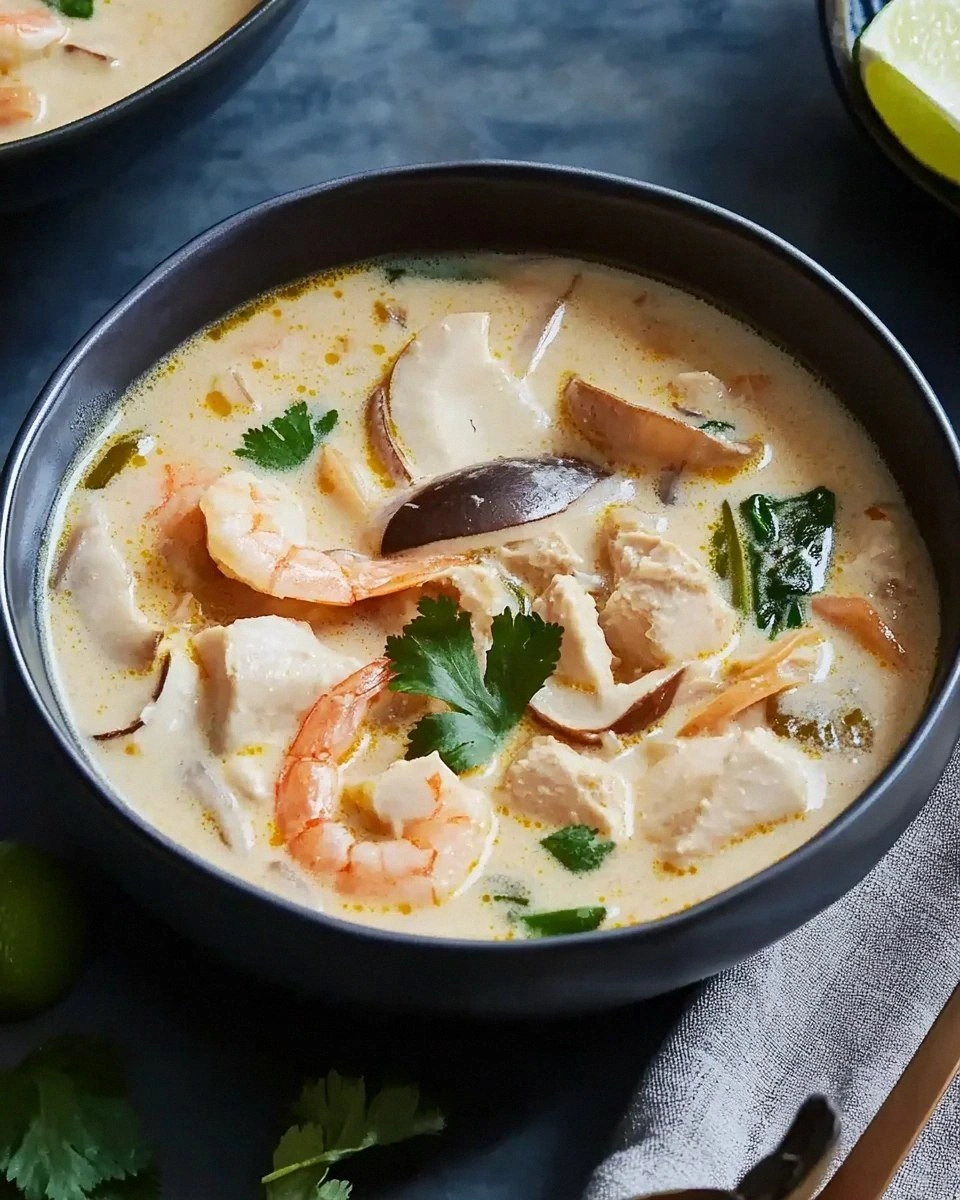
- If you're using shrimp, now's their moment—add them to the hot (but not simmering) soup and let them poach gently for 3-4 minutes. They'll turn pink and curl into perfect crescents, indicating they're perfectly cooked. Overcooked shrimp curl into tight circles and have the texture of rubber bands—don't let this happen to you. The residual heat from the soup is enough to cook them through without turning them into seafood-flavored erasers.
- Serve immediately in deep bowls, garnished with fresh cilantro, sliced red chilies for color, and an extra squeeze of lime for brightness. The soup should be steaming hot but not boiling—hot enough to warm your soul but cool enough to taste all the nuances. If you've done everything right, the first spoonful should transport you to a beach in Thailand where the hardest decision is whether to order another bowl or take a nap in a hammock.
That's it—you did it. But hold on, I've got a few more tricks that'll take this to another level...
Insider Tricks for Flawless Results
The Temperature Rule Nobody Follows
Here's the thing that separates restaurant-quality soup from home attempts: temperature control is everything. Once coconut milk joins the party, your soup should never exceed 180°F. Use an instant-read thermometer if you're fancy, or just look for gentle steam rising from the surface rather than vigorous bubbling. I learned this the hard way after serving separated, greasy soup to dinner guests who politely pretended it was delicious while secretly wondering if I'd poured oil in their bowls. If you've ever struggled with this, you're not alone—and I've got the fix.
Why Your Nose Knows Best
Your sense of smell is your most underutilized cooking tool. When the aromatics hit the oil, close your eyes and inhale deeply. You should smell lemongrass first, then galangal, then chilies. If any one aroma overpowers the others, adjust immediately—add more of what's missing or cook longer to mellow what's too strong. This soup should smell like a tropical garden after a rainstorm, each scent distinct but harmonious. A friend tried skipping this sensory check once—let's just say it didn't end well, and her kitchen smelled like potpourri for days.
The 5-Minute Rest That Changes Everything
After seasoning, let your soup rest off heat for 5 minutes before serving. This isn't laziness—it's flavor science. The salt needs time to dissolve fully, the lime juice needs to integrate, and the aromatics need a moment to release their final burst of flavor. Taste again after the rest—you'll be amazed how the flavors have melded and deepened. This is also when you make your final adjustments, because the perfect balance reveals itself in these quiet moments.
Creative Twists and Variations
This recipe is a playground. Here are some of my favorite ways to switch things up:
The Seafood Lover's Dream
Swap the chicken for a mix of shrimp, scallops, and firm white fish like halibut or cod. Add the seafood in order of cooking time—fish first for 3 minutes, then shrimp for 2, then scallops for the final minute. The result tastes like you've captured the essence of a tropical ocean in coconut form. I'll be honest—I ate half the batch before anyone else got to try it, and I have zero regrets.
The Vegetarian Victory
Replace chicken with cubes of firm tofu that you've pressed and pan-fried until golden. Use mushroom-based vegetarian fish sauce or a mix of soy sauce and white miso. Add extra mushrooms—shiitake, oyster, and enoki create a meaty texture that satisfies even carnivores. The umami from the mushrooms and miso creates a depth that makes you forget there's no meat involved.
The Spice Hunter's Version
For those who like to live dangerously, add 2 teaspoons of Thai chili paste (nam prik pao) along with the curry paste. This adds a smoky, slightly sweet heat that builds slowly and lingers pleasantly. Serve with extra lime wedges because the acid helps cut through the heat and keeps your taste buds from going numb. Picture yourself pulling this out of the oven, the whole kitchen smelling like you've installed a personal Thai restaurant.
The Comfort Food Mashup
Add egg noodles during the last 5 minutes of cooking to transform this into a coconut curry noodle soup that'll cure any cold, heartbreak, or bad day. The noodles soak up the broth and create a thick, stew-like consistency that's pure comfort in a bowl. Use fresh ramen noodles if you can find them, or dried rice noodles for a gluten-free version.
The Exotic Fruit Twist
Add chunks of ripe mango or pineapple during the last 2 minutes for a sweet-savory version that's surprisingly addictive. The fruit should be just warmed through but not cooked to mush. This version pairs beautifully with shrimp and makes an impressive starter for a dinner party. Most recipes get this completely wrong, adding fruit too early so it disintegrates into the broth.
The Winter Warmer
Add a cinnamon stick and 2 star anise pods with the aromatics for a version that tastes like Thailand meets mulled wine. Remove the whole spices before serving. This variation is perfect for cold winter nights when you need something to warm you from the inside out. The warm spices complement the coconut in ways that'll make you question why this isn't the standard version.
Storing and Bringing It Back to Life
Fridge Storage
This soup keeps beautifully for up to 4 days in the refrigerator, but here's the key: store the protein separately from the broth. The coconut milk will thicken when cold, creating a texture that might alarm you—it's supposed to do that. When reheating, add a splash of water or chicken stock to thin it to your desired consistency. Warm it gently over low heat, never letting it boil, stirring occasionally. The flavors actually meld and improve after a day, making leftovers something to celebrate rather than endure.
Freezer Friendly
You can freeze this soup, but with caveats. The coconut milk may separate upon thawing, creating a grainy texture. To minimize this, freeze the soup without the coconut milk, adding it during reheating. Portion into freezer bags, squeeze out excess air, and lay flat to freeze—this creates space-saving soup sheets that thaw quickly. Frozen soup keeps for up to 3 months, though I doubt it'll last that long. Thaw overnight in the refrigerator, then reheat gently with fresh coconut milk added.
Best Reheating Method
The microwave is not your friend here—it'll create hot spots that break the coconut milk and leave you with an oily mess. Instead, reheat gently in a pot over low heat, stirring frequently. Add a tiny splash of water before reheating—it steams back to perfection. If the soup has separated, don't panic—whisk vigorously while warming, and it'll usually come back together. For best results, reheat only what you'll eat immediately, as repeated heating and cooling further breaks down the coconut milk.