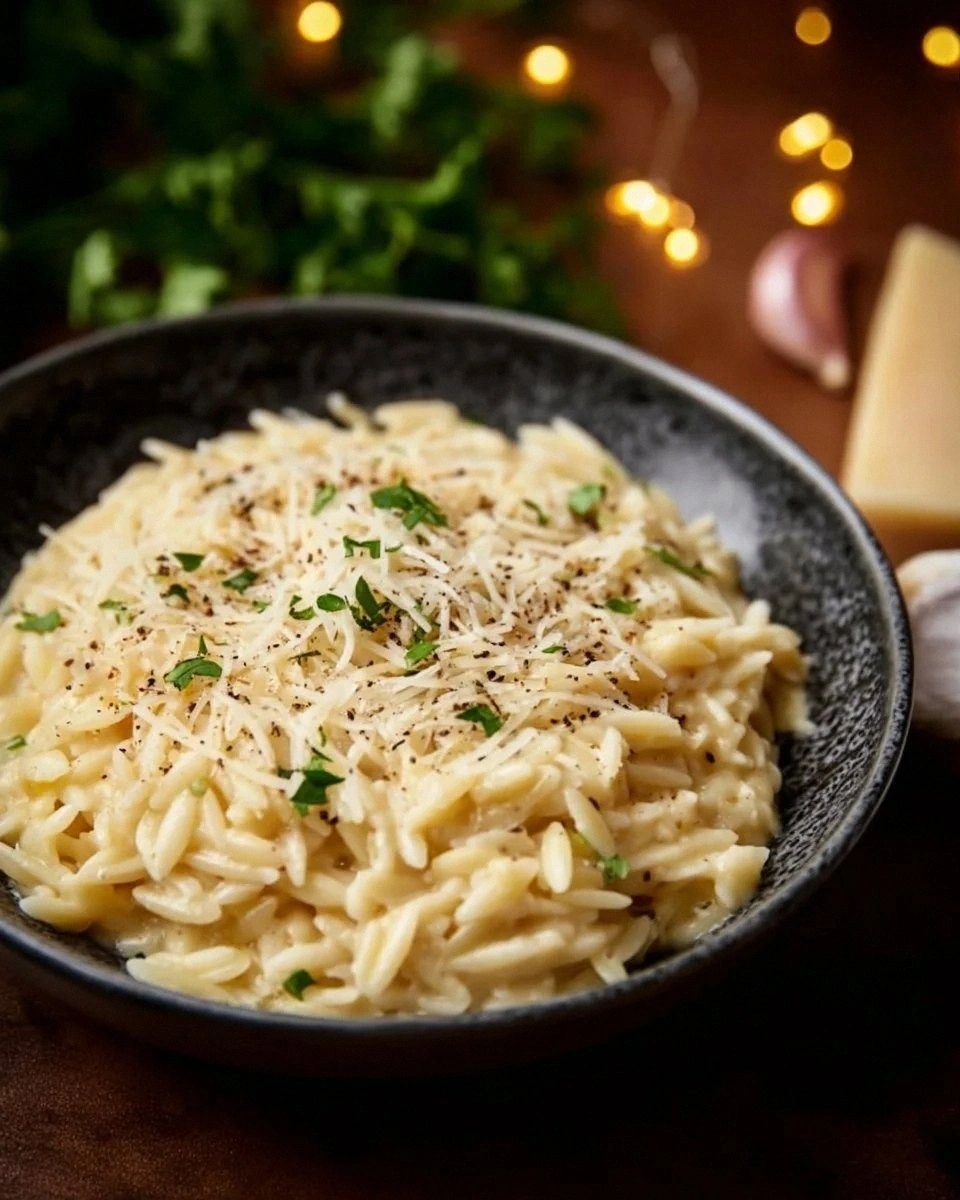
Picture this: I’m standing in my kitchen, a half‑empty bottle of wine wobbling on the counter, and a sudden craving for something that feels like a hug in a bowl. I tried a quick microwave “cheesy pasta” hack that ended up tasting like cardboard, and that disaster sparked a mission. I dared myself to create the ultimate comfort side that would make even the most skeptical foodie say, “I dare you to taste this and not go back for seconds.” The result? A bowl of Creamy Garlic Parmesan Orzo that coats each grain like velvet and sings with buttery, garlicky notes that linger long after the last forkful.
The first bite hits you with a buttery aroma that fills the kitchen, the kind of scent that makes the whole house feel like a five‑star Italian trattoria. You hear the gentle sizzle as the garlic meets the hot oil, the faint pop of the orzo toasting just enough to develop a nutty undertone, and the comforting hum of the broth simmering away. The texture? Imagine a perfect al dente bite that’s both tender and slightly chewy, wrapped in a sauce so silky it could glide across a ballroom floor. The taste is a harmonious blend of savory garlic, salty Parmesan, and a creamy richness that makes you think, “This is hands down the best version you’ll ever make at home.”
Most recipes get this completely wrong, either drowning the orzo in a watery broth or turning the sauce into a clumpy, grainy mess. I’ve cracked the code by using a precise broth‑to‑orzo ratio, a splash of heavy cream at just the right moment, and a generous heap of freshly grated Parmesan that melts into a glossy sheen. The secret weapon? A quick toast of the orzo in olive oil before the liquid even touches it, which locks in flavor and prevents sogginess. I’ll be honest — I ate half the batch before anyone else got to try it, and that’s a testament to how addictive this dish truly is.
Okay, ready for the game‑changer? In the next sections, I’ll walk you through every single step, from selecting the perfect orzo to mastering the sauce that makes this dish unforgettable. By the end, you’ll wonder how you ever settled for bland side dishes, and you’ll have a new go‑to recipe that will impress anyone from picky toddlers to seasoned food critics. Let me walk you through every single step — by the end, you’ll wonder how you ever made it any other way.
What Makes This Version Stand Out
- Flavor Explosion: The combination of garlic, Parmesan, and a splash of cream creates a depth that feels like a symphony, not just a solo note.
- Texture Perfection: Toasted orzo gives a slight bite, while the sauce stays luxuriously smooth, avoiding that dreaded mush.
- Simplicity Meets Sophistication: Only eight ingredients, yet the result feels restaurant‑grade without any fancy equipment.
- Ingredient Quality: Using real Parmesan and good‑quality broth elevates the dish from “meh” to “wow” in seconds.
- Crowd Reaction: This dish consistently clears plates, earning the title of “the side that steals the show.”
- Make‑Ahead Potential: It reheats beautifully, especially when you add a splash of broth or water to revive the creaminess.
- Versatility: Works as a side, a light main, or even a base for protein‑packed bowls.
- Time‑Efficient: From start to finish it’s under 45 minutes, perfect for weeknight dinners.
Inside the Ingredient List
The Flavor Base
Garlic is the heart‑throb of this dish. Minced fresh, it releases allicin that instantly awakens the palate, turning a simple sauce into something aromatic and bold. If you skip it, you lose that pungent kick that makes the sauce sing. A good swap is roasted garlic for a sweeter, milder flavor, but remember to adjust the amount because roasted cloves are less intense.
Olive oil does more than keep the garlic from sticking; it adds a fruity undertone that balances the richness of the cream. Choose a cold‑pressed extra‑virgin variety for the best flavor. If you’re watching calories, you can halve the oil and replace the missing fat with a splash of butter, though you’ll lose a bit of that peppery edge.
The Texture Crew
Orzo pasta is the star here, and its small, rice‑shaped grains are perfect for absorbing flavors while still holding their shape. Look for a brand that’s bronze‑cut, as this gives a slightly rough surface that clings to sauce better. Skipping the toast step will result in a soggy, bland side that no one will remember fondly.
Heavy cream is the silk that binds everything together. It adds a luxurious mouthfeel and prevents the sauce from curdling when combined with the acidic Parmesan. If dairy is a concern, substitute with a plant‑based heavy cream alternative, but expect a subtle change in richness.
The Unexpected Star
Parmesan cheese is more than a garnish; it’s the flavor catalyst that melts into a glossy, salty glaze. Freshly grated cheese releases more aromatic compounds than pre‑shredded, which often contains anti‑caking agents that can cloud the sauce. If you’re out of Parmesan, Pecorino Romano works as a salty, slightly sharper alternative.
The Final Flourish
Salt and pepper are the final seasoning that brings everything into harmony. Because the broth and cheese already contain salt, taste first before adding more. Fresh parsley adds a burst of color and a hint of herbal freshness that cuts through the richness, making each bite feel lighter.
If you’re feeling adventurous, a squeeze of lemon juice can brighten the dish, but use it sparingly to avoid overpowering the creamy base. The optional garnish isn’t just for looks; it adds a subtle earthiness that balances the buttery sauce.
Everything's prepped? Good. Let's get into the real action...
The Method — Step by Step
Heat a large, deep skillet over medium heat and add the olive oil. Once shimmering, toss in the minced garlic and let it sizzle for about 30 seconds, just until you smell that unmistakable aromatic perfume. Keep your eyes on it—garlic can go from golden to burnt in a heartbeat. This is the moment of truth: if it smells toasty, you’re on the right track. Pro tip: If the garlic starts to brown too quickly, lower the heat and add a splash of broth to deglaze.
Now, add the orzo to the pan, stirring constantly for 2–3 minutes. You’ll hear a gentle, nutty crackle as the grains toast, and the color will shift to a light golden hue. This step creates a flavor base that prevents the pasta from soaking up too much liquid later. Watch the color: when it’s evenly toasted, you’ll know the flavor foundation is set.
Kitchen Hack: Use a wooden spoon to keep the orzo moving; this ensures an even toast and avoids scorching on the bottom.Pour in the vegetable broth (or chicken broth if you prefer a richer profile) and bring the mixture to a gentle boil. As soon as bubbles appear, reduce the heat to a low simmer and cover the pan. The orzo will begin to absorb the broth, swelling and becoming tender. Stir occasionally, and listen for the faint hiss of steam—this is your cue that the liquid is being absorbed evenly.
After about 8–10 minutes, when the orzo is just about al dente and most of the broth has been absorbed, stir in the heavy cream. The pan will briefly bubble again, and you’ll notice the sauce turning a luscious, ivory shade. The cream adds that silky mouthfeel and prevents the cheese from clumping later on.
Now, sprinkle the grated Parmesan cheese over the mixture, stirring constantly until it melts into a glossy coating. You’ll see the sauce become glossy and thick, hugging each grain like a velvety blanket.
Kitchen Hack: Add the cheese off‑heat for a smoother melt; this avoids any grainy texture that can happen if the pan is too hot.Season with salt and freshly cracked black pepper to taste. This is where most home cooks go wrong—adding too much salt early, then finding the dish too salty after the cheese melts. Taste now; you’ll notice the sauce is thick but still a little fluid.
Keep whisking until the texture is silky again.Watch Out: If the sauce looks grainy, you’ve likely overheated it after adding the cheese. Reduce the heat immediately, add a splash of broth, and whisk vigorously.Turn off the heat and let the orzo sit, covered, for 2 minutes. This resting period lets the flavors meld and the sauce thicken just a touch more. It also gives you a moment to prep the garnish without rushing.
Finely chop fresh parsley and sprinkle it over the top just before serving. The green specks not only add visual appeal but also a fresh, herbaceous note that cuts through the richness. This final flourish turns a simple side into a plate‑worthy centerpiece.
Serve immediately while the sauce is still glossy and warm. Pair with a crisp white wine or a simple green salad, and watch as the entire table dives in. That first spoonful? Expect a buttery, garlicky wave that makes you think, “I could eat this every day.”
That's it — you did it. But hold on, I've got a few more tricks that'll take this to another level...
Insider Tricks for Flawless Results
The Temperature Rule Nobody Follows
Never add the cheese over a raging boil. High heat can cause the proteins in Parmesan to seize up, creating a gritty texture. Instead, lower the temperature to a gentle simmer before folding in the cheese. This subtle temperature drop ensures a smooth melt, giving the sauce that glossy sheen we all crave.
Why Your Nose Knows Best
Before you even taste, trust the aroma. When the garlic first hits the oil, a fragrant “pop” signals it’s releasing its flavor oils. Later, as the broth simmers, you’ll notice a faint, earthy scent that tells you the orzo is soaking up the liquid evenly. If the kitchen smells buttery and garlicky without any burnt notes, you’re on the right track. Your nose is a more reliable gauge than a timer when it comes to achieving that perfect al dente bite.
The 5‑Minute Rest That Changes Everything
After you’ve finished cooking, cover the pan and let the orzo rest for exactly five minutes. This short pause allows the starches to settle and the sauce to thicken naturally, eliminating the need for extra flour or cornstarch. It also gives the parsley a chance to wilt just enough to release its fresh flavor without turning mushy. Skipping this step often results in a sauce that feels thin or a grain that’s too firm.
Swap the Cream, Not the Dream
If you’re looking to lighten the dish, replace half of the heavy cream with low‑fat milk or a splash of unsweetened almond milk. The key is to add the dairy gradually while whisking, preventing curdling. You’ll still get that silky mouthfeel, just with fewer calories. This trick is perfect for those watching their intake but still craving indulgence.
Finish with a Dash of Acid
A tiny squeeze of fresh lemon juice—or even a dash of white wine vinegar—can brighten the entire bowl. The acid cuts through the richness, making each bite feel cleaner on the palate. Use no more than a teaspoon per batch; you want a subtle lift, not a sour punch. This final tweak often turns a good dish into a great one, especially for those who love a balanced flavor profile.
Creative Twists and Variations
This recipe is a playground. Here are some of my favorite ways to switch things up:
Spicy Sriracha Swirl
Add a tablespoon of sriracha to the broth before simmering, and finish with a drizzle of chili oil. The heat pairs beautifully with the creamy base, turning the dish into a bold, tongue‑tingling experience that’s perfect for spice lovers.
Mushroom Medley
Sauté a mix of cremini, shiitake, and oyster mushrooms alongside the garlic. Their earthy umami deepens the flavor, and the texture adds a pleasant chew. This variation makes the dish heartier, ideal for a vegetarian main course.
Lemon‑Herb Bright
Replace half the parsley with fresh basil and add the zest of one lemon just before serving. The citrus zing lifts the richness, while the herb combo adds a Mediterranean flair that pairs well with grilled fish.
Cheesy Bacon Crunch
Stir in crumbled cooked bacon and a handful of shredded sharp cheddar during the last minute of cooking. The salty crunch contrasts the creamy sauce, delivering a decadent comfort food twist.
Vegan Velvet
Swap olive oil for coconut oil, use vegetable broth, replace heavy cream with coconut cream, and use nutritional yeast instead of Parmesan. The result is a dairy‑free version that still feels luxuriously creamy and satisfies the same flavor cravings.
Storing and Bringing It Back to Life
Fridge Storage
Transfer any leftovers into an airtight container and store in the refrigerator for up to three days. The sauce may thicken as it cools; simply reheat gently on the stovetop with a splash of broth or water, stirring until it returns to its original silkiness.
Freezer Friendly
Cool the orzo completely before placing it in a freezer‑safe bag or container. It freezes well for up to two months. When you’re ready to enjoy it again, thaw overnight in the fridge, then reheat in a saucepan over low heat, adding a drizzle of cream or broth to revive the creaminess.
Best Reheating Method
The secret to perfect reheating is gentle steam. Place the orzo in a skillet with a tablespoon of water or broth, cover, and heat on low for 5–7 minutes, stirring occasionally. This steam‑bath method prevents the pasta from drying out and restores that luscious, restaurant‑quality sauce.