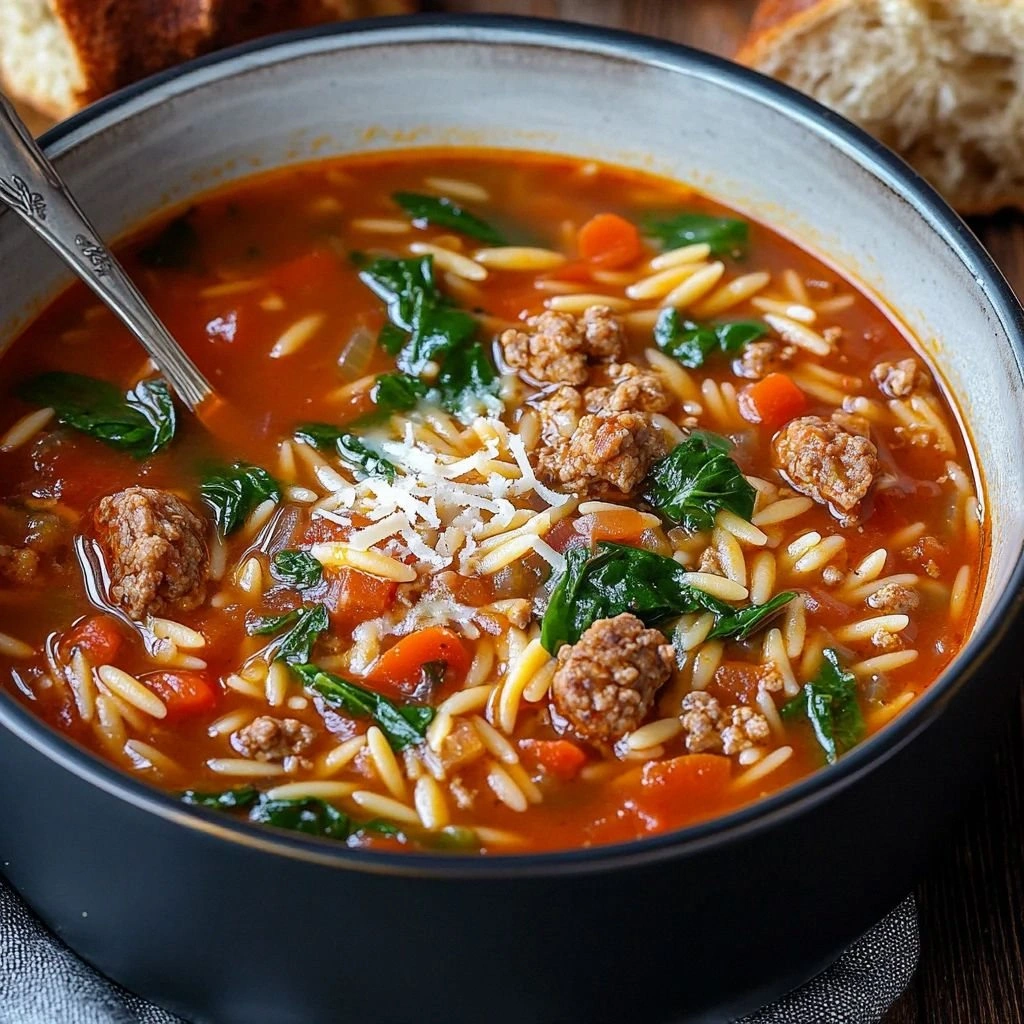
I still remember the first time I made this Italian Sausage Orzo Soup — it was a Tuesday night that had gone sideways. My original dinner plans had collapsed like a deflated soufflé, my stomach was staging a full-scale revolt, and all I had was some Italian sausage, a half-empty box of orzo, and a prayer. What happened next in my modest kitchen was nothing short of culinary alchemy. The way the sausage fat rendered into a golden pool of flavor, how the orzo swelled into tiny pasta pillows that could make angels weep — I knew I had stumbled onto something truly special. That sizzle when the sausage hit the pan? Absolute perfection. By the end of that pot, I was licking my spoon like a woman possessed, already plotting when I could make it again.
Here's the thing about most Italian sausage soups out there — they're either watery disappointments that taste like someone waved a sausage over some broth, or they're so heavy you feel like you swallowed a brick. Mine strikes that perfect balance between substantial and slurp-worthy. The broth gets this magical creaminess from the starch released by the orzo, while staying light enough that you can go back for seconds without needing a nap. I dare you to taste this and not go back for seconds. The flavor layers build like a symphony, starting with that aromatic soffritto base, then the wine deglazing (trust me on this one), and finally that hit of fresh herbs that makes everything sing.
I'll be honest — I ate half the batch before anyone else got to try it. My husband came home to find me standing over the stove with that guilty look, wooden spoon still in hand, soup splattered on my shirt like evidence at a crime scene. But can you blame me? This soup has that magical property where time seems to disappear, and suddenly you've been standing there for twenty minutes, ladling and tasting and pretending you're just "checking the seasoning." Picture yourself pulling this out of the oven, the whole kitchen smelling incredible, steam rising like a warm invitation to comfort.
What makes this version different? We're going to brown the sausage until it develops those gorgeous caramelized bits that dissolve into the broth and create pure magic. We're using a technique I learned from an Italian grandmother who swore by adding the orzo at precisely the right moment to avoid that dreaded mushy texture. And stay with me here — this is worth it — we're finishing with a splash of cream that turns the whole thing into liquid velvet without making it heavy. Let me walk you through every single step — by the end, you'll wonder how you ever made it any other way.
What Makes This Version Stand Out
Flavor Bomb: This soup builds layers of flavor like a well-orchestrated opera. Starting with properly browned Italian sausage that creates fond (those gorgeous brown bits) in the pot, we deglaze with wine and layer in aromatics until your kitchen smells like a trattoria in Rome. The result is a broth that's so deeply savory, you'll want to bottle it and bathe in it.
Texture Paradise: Most orzo soups turn into a starchy mess where the pasta disintegrates into sad, mushy oblivion. Not here. We cook the orzo separately and add it at the perfect moment, ensuring each tiny grain stays al dente and distinct, swimming in that glorious broth like tiny edible pearls. The contrast between the tender sausage, perfectly cooked pasta, and the vegetables that still have a pleasant bite creates a textural experience that'll make you close your eyes with each spoonful.
One-Pot Wonder: Despite tasting like it simmered all day, this entire masterpiece comes together in a single pot and takes under an hour from start to finish. The cleanup is minimal, which means more time for ladling hot soup into bowls and less time scrubbing dishes. If you've ever struggled with complicated recipes that use every pan in your kitchen, you're not alone — and I've got the fix.
Weekend to Weeknight: This recipe scales beautifully from casual Tuesday dinner to impressive Saturday night entertaining. Dress it up with a drizzle of good olive oil and some crusty bread, and suddenly you've got a restaurant-quality meal that costs pennies to make. Your dinner guests will be begging for the recipe, and you can take all the credit.
Ingredient Quality Focus: We're using real Italian sausage here, not that mystery meat stuff that comes in plastic tubes. The difference is night and day. Fresh fennel seeds, quality tomatoes, and good wine you would actually drink — these aren't just fancy add-ons, they're the difference between good soup and legendary soup.
Make-Ahead Magic: This soup actually tastes better the next day after the flavors have had time to marry and deepen. Make a double batch on Sunday, and you've got lunch sorted for the week. The orzo holds up beautifully without turning to mush, and the broth develops this incredible richness that makes you look like a culinary genius.
Inside the Ingredient List
The Flavor Base
The Italian sausage is undeniably the star here, and we're using the good stuff — look for links that feel firm and have visible flecks of herbs throughout. Skip anything that looks pale or feels mushy; that's a one-way ticket to bland town. I prefer hot Italian sausage because the spice creates this beautiful contrast with the creamy broth, but mild works if you're feeding tiny humans or spice-averse adults. The key is browning it properly until it develops those gorgeous caramelized edges that'll make the broth taste like it simmered for hours. If you skip the browning step, you'll end up with gray, sad sausage floating in watery broth — trust me, I've been there.
That soffritto of onion, carrot, and celery isn't just filler — it's the aromatic backbone that transforms ordinary soup into something that tastes authentically Italian. Dice them small and uniform so they cook evenly and melt into the broth. The carrot adds a subtle sweetness that balances the spice from the sausage, while the celery brings that unmistakable aromatic quality that makes your kitchen smell like you've been transported to a Tuscan farmhouse.
The Texture Crew
Orzo is the pasta that thinks it's rice, and in this soup, it plays the role perfectly. These tiny rice-shaped pasta pieces catch all the broth in their nooks and crannies, delivering maximum flavor in every bite. The trick is cooking them separately until just al dente, then adding them to the soup at the very end. This prevents them from absorbing all the broth and turning into a starchy mess. If you can't find orzo, ditalini or small shells work, but there's something magical about how orzo swells into these perfect little pillows that seem custom-designed for soup.
The cannellini beans aren't just there for protein (though they do make this soup substantial enough for dinner). They're creaminess bombs that burst in your mouth, adding another layer of texture and helping to thicken the broth naturally. Make sure to rinse them well unless you enjoy the slightly metallic taste that comes from the canning liquid. If you're feeling fancy, you can use dried beans that you've cooked yourself, but honestly, the canned ones are perfect here.
The Unexpected Star
That splash of white wine is pure magic — it adds acidity that brightens all the rich flavors and helps lift any browned bits from the bottom of the pot. Use something you'd actually drink, because life's too short for cooking wine. The alcohol cooks off, leaving behind this incredible complexity that makes people ask "what's in this?" in the best possible way. If wine isn't your thing, a tablespoon of lemon juice at the end provides similar brightness, though the wine really does create something special here.
Fresh spinach might seem like an afterthought, but it wilts into silky ribbons that add color and nutrition without overwhelming the other flavors. Add it at the very end so it stays vibrant green and doesn't turn that sad army color. Baby spinach works best because the stems are tender, but regular spinach works too — just remove any tough stems first.
The Final Flourish
Heavy cream might seem like overkill, but just a splash transforms the broth from thin soup to liquid velvet. It's the difference between feeling like you're eating something healthy and feeling like you're indulging in pure comfort. The key is adding it off the heat so it doesn't curdle and ruin the whole pot. If you're dairy-free, coconut cream works surprisingly well, adding a subtle sweetness that plays beautifully with the sausage spices.
Quality Selection Tips
When shopping for Italian sausage, look for links with a good distribution of fat — you want about 20% fat for maximum flavor without greasiness. The meat should be bright pink, not gray or brown, and the casings should look fresh, not dried out. If you can find sausage from a local Italian market, grab it. The difference between mass-produced and artisanal sausage is like comparing a symphony to a kazoo. Good sausage will have visible herbs and sometimes even cheese mixed in, creating those little flavor bombs throughout your soup.
Everything's prepped? Good. Let's get into the real action...
The Method — Step by Step
- Start by heating a heavy-bottomed pot or Dutch oven over medium-high heat. You want it hot enough that when you add the sausage, it immediately starts sizzling and creating those gorgeous brown bits that'll flavor the entire soup. Remove the sausage from its casings and crumble it into the hot pot. Don't stir too much initially — let it sit and develop that beautiful caramelization. The aroma that fills your kitchen at this point should make your neighbors jealous. Cook for about 6-8 minutes, breaking it up with a wooden spoon, until it's nicely browned and the fat has rendered out. Those brown bits stuck to the bottom? Pure gold.
- While the sausage works its magic, dice your onion, carrot, and celery into small, even pieces. This isn't the time for rustic chunks — you want them to cook evenly and melt into the background. Once the sausage is browned, remove it with a slotted spoon and set aside, leaving all that glorious fat in the pot. Add your diced vegetables and a pinch of salt. The salt helps draw out moisture and prevents burning while the vegetables soften. Cook for about 5 minutes, stirring occasionally, until the vegetables are translucent and starting to turn golden at the edges. Your kitchen should smell like an Italian grandmother's cooking.
- Okay, ready for the game-changer? Add the minced garlic and cook for just 30 seconds — any longer and it turns bitter. Now pour in that white wine and watch the magic happen. Use your wooden spoon to scrape up all those beautiful brown bits from the bottom of the pot. This is called deglazing, and it's where we capture all the concentrated flavor that the sausage left behind. Let the wine bubble away for about 2 minutes until it's reduced by half. The alcohol cooks off, leaving behind this incredible complexity that makes people ask for your secret ingredient.
- Now the fun part — building the broth. Add your chicken stock, diced tomatoes (with their juice), and a bay leaf. Return the sausage to the pot, along with any juices that collected on the plate. This next part? Pure magic. Bring everything to a boil, then reduce to a gentle simmer. Let it bubble away for about 15 minutes, which gives all the flavors time to meld and marry. The soup will start to take on this beautiful rich color that makes your mouth water just looking at it.
- While the soup simmers, it's time to prep the finishing touches. Drain and rinse your cannellini beans, chop your spinach, and have your cream measured out. The key here is having everything ready because the final assembly happens quickly. Taste the broth and adjust seasoning — it might need more salt, especially if you used low-sodium stock. Add some freshly ground black pepper and a pinch of red pepper flakes if you like heat.
- After 15 minutes, your soup should smell absolutely incredible. The broth will have thickened slightly and taken on a beautiful deep color. Now add your drained beans and let them warm through for about 2 minutes. They'll start to break down just a little, adding creaminess to the broth without making it heavy. This is also when you should check that your orzo is cooked to al dente perfection.
- And now the fun part — we're going to make this soup absolutely luxurious. Remove the pot from heat and stir in your cream. It should swirl into the broth like liquid silk, turning everything this gorgeous pale orange color. Add your cooked orzo and stir gently to combine. Throw in the spinach and watch it wilt into silky ribbons within seconds. The residual heat is perfect — it cooks the spinach just enough without turning it that sad army green color.
- Finally, remove the bay leaf (nobody wants to bite into that), and stir in your fresh basil. The heat will release the basil's oils and perfume the entire soup. Let it rest for 5 minutes — this is crucial. It allows the flavors to meld and the soup to cool slightly, preventing that terrible tongue-burning experience we've all suffered through. Serve hot with plenty of crusty bread for sopping up every last drop of that incredible broth.
That's it — you did it. But hold on, I've got a few more tricks that'll take this to another level...
Insider Tricks for Flawless Results
The Temperature Rule Nobody Follows
Most people cook their soup at too high a temperature, resulting in tough meat and mushy vegetables. The magic happens at a gentle simmer — you should see just a few bubbles breaking the surface, not a rolling boil. This slow, lazy bubble allows flavors to develop and meld without overcooking anything. Think of it like a spa day for your soup — everything relaxes and releases its best qualities. A friend tried rushing this step once — let's just say it didn't end well. Her sausage turned into rubber bullets and the vegetables tasted like they'd been boiled since last Tuesday.
Why Your Nose Knows Best
Don't underestimate the power of aromatics. That moment when the garlic hits the hot oil and fills your kitchen with its perfume? That's when you know you're on the right track. The same goes for when the wine deglazes the pot — if you're not getting hit with waves of incredible aroma, turn up the heat a notch. Your nose is actually the best timer in your kitchen. When the sausage smells deeply savory and the vegetables smell sweet rather than raw, you're ready to move on to the next step. Ignore the clock and trust your senses.
The 5-Minute Rest That Changes Everything
After you finish cooking, resist the urge to dive in immediately. Let the soup rest for 5-10 minutes off the heat — this is when the magic happens. The flavors redistribute, the temperature evens out, and everything settles into perfect harmony. It's like the difference between a good photograph and a great one — sometimes you just need to wait for everything to come into focus. During this rest, the orzo will absorb just a bit more flavor, and the broth will develop that silky texture that makes restaurant soups so addictive.
The Salt Timing Trick
Season in layers, not all at once. Salt the vegetables as they cook, then adjust after adding the stock, and finally taste again before serving. Each ingredient needs salt to bring out its best flavor, but adding it all at once can lead to over-salting. The soup will taste flat if you under-salt, but too much salt masks all the beautiful flavors you've worked to build. I keep a small bowl of salt near the stove and add pinches throughout the cooking process, tasting as I go.
Creative Twists and Variations
This recipe is a playground. Here are some of my favorite ways to switch things up:
Spicy Tuscan Version
Replace the hot Italian sausage with spicy chorizo and add a teaspoon of smoked paprika when you add the garlic. The chorizo's smoky heat transforms the entire character of the soup, giving it a Spanish flair that'll warm you from the inside out. Swap the white beans for chickpeas and finish with a squeeze of lemon instead of cream. The result is a soup that tastes like it came from a tapas bar in Barcelona rather than a trattoria in Rome.
Green Goddess Variation
Load up on vegetables by adding zucchini, kale, and peas during the last 5 minutes of cooking. The zucchini adds a lovely texture, while the kale brings earthiness and the peas pop with sweetness. Replace the basil with fresh parsley and tarragon for a springtime version that tastes like eating a garden. The cream becomes optional here — sometimes I just drizzle each bowl with good olive oil for a lighter, brighter version that celebrates the vegetables.
Seafood Lover's Dream
Swap the sausage for shrimp and scallops, using the same technique of browning the seafood first to create fond. Add them back during the last 3 minutes of cooking so they stay tender. Use fish stock instead of chicken stock, and finish with a splash of Pernod instead of cream. The anise flavor pairs beautifully with seafood and gives the whole soup a sophisticated edge that'll impress dinner guests who think they've had every soup imaginable.
Vegetarian Comfort
Replace the sausage with a mix of cremini and shiitake mushrooms, cooking them until they're deeply caramelized to create that umami richness. Add a tablespoon of soy sauce to the broth for depth, and use vegetable stock instead of chicken. The mushrooms provide that satisfying meaty texture and earthy flavor that makes even dedicated carnivores happy. Sometimes I'll add a handful of lentils for extra protein and that same hearty satisfaction the original version provides.
Creamy Tomato Basil Remix
Double the tomatoes and add a can of tomato paste for an ultra-rich tomato base. Let it cook down until it becomes almost jammy before adding the stock. Use fresh mozzarella instead of cream, letting it melt into stringy pockets throughout the soup. Finish with a chiffonade of fresh basil that's almost excessive — this version tastes like eating pizza in soup form, which is exactly as amazing as it sounds.
Autumn Harvest Edition
Add diced butternut squash and swap the spinach for chopped kale. The squash adds natural sweetness that pairs beautifully with the sausage, while the kale holds up better if you want to make this ahead. Add some sage along with the basil for that classic autumn flavor combination. This version tastes like wrapping yourself in a warm blanket while watching leaves fall outside your window.
Storing and Bringing It Back to Life
Fridge Storage
This soup keeps beautifully in the refrigerator for up to 4 days, making it perfect for meal prep. Store it in an airtight container, but here's the key — keep the orzo separate if possible. If you've already mixed it in, no worries, just know it'll continue to absorb broth and thicken. When you're ready to reheat, add a splash of water or stock to thin it back to the perfect consistency. The flavors actually deepen and improve after a day or two, so Sunday's soup becomes Tuesday's treasure.
Freezer Friendly
Most cream soups don't freeze well, but here's a workaround — freeze everything except the cream and orzo. Portion the soup base into freezer bags, lay them flat to freeze (saves space), and they'll keep for up to 3 months. When you're ready to eat, thaw overnight in the fridge, then reheat and add freshly cooked orzo and cream. It's like having homemade soup at a moment's notice, which has saved my dinner plans more times than I can count.
Best Reheating Method
Gentle is the name of the game here. Reheat over low heat, stirring frequently, and add liquid as needed. Never let it boil once the cream is added, or you'll end up with a curdled mess that looks like cottage cheese soup. If you're in a rush, microwave individual portions with a splash of water, stopping to stir every 30 seconds. Add a tiny splash of water before reheating — it steams back to perfection. Fresh herbs wake everything up, so add a sprinkle of basil or parsley just before serving, even if the soup was frozen.