I’ll never forget the night I tried to impress a date with a fancy Italian‑style dinner and ended up with a pan of soggy chicken that tasted like a watered‑down vinaigrette. The kitchen was a battlefield of clanging pans, a smoke alarm that thought it was auditioning for a rock concert, and a sauce that refused to thicken no matter how many times I whisked it. I was ready to surrender to the culinary chaos, but then I remembered a trick a friend swore by: combine the acidity of balsamic with the sweet whisper of honey and let everything finish in one pan. That tiny pivot turned the disaster into a dish that sang like an opera—rich, tangy, and just the right amount of sweet, all while keeping the chicken juicy and the tomatoes bursting.
Imagine the kitchen filled with the aroma of caramelizing garlic, the faint perfume of Italian herbs, and the subtle perfume of fresh basil that makes you feel like you’re strolling through a Tuscan garden at sunset. You’ll hear the sizzle of the chicken as it meets the hot oil, a sound that promises a golden crust, and you’ll feel the pan’s heat radiating up to your fingertips, reminding you that you’re in control of something delicious. The first bite delivers a perfect balance: the chicken is tender, the sauce coats it like a glossy, sweet‑tart glaze, and the mozzarella melts into a creamy veil that pulls everything together. It’s the kind of dish that makes you want to pause mid‑bite, close your eyes, and let the flavors dance across your palate.
What makes this version the best you’ll ever make at home is the simplicity of the technique paired with a few secret tweaks that most recipes completely miss. Most recipes either drown the chicken in a watery sauce or over‑cook the tomatoes until they turn into a mushy mess. I’ve cracked the code by searing the chicken first, deglazing with a balsamic‑honey reduction, and then letting the tomatoes and mozzarella finish the show without losing their integrity. The result? A dish that looks restaurant‑worthy, tastes like a love‑letter to your taste buds, and only requires one pan—so cleanup is practically nonexistent.
I dare you to taste this and not go back for seconds. Okay, ready for the game‑changer? The secret ingredient is a splash of Dijon mustard that emulsifies the sauce, giving it a velvety body that clings to every bite. Let me walk you through every single step — by the end, you’ll wonder how you ever made it any other way.
What Makes This Version Stand Out
- Flavor Explosion: The balsamic‑honey glaze creates a sweet‑tart symphony that sings with every bite, while the Dijon adds a subtle kick that keeps the palate intrigued.
- Texture Contrast: Crispy, golden‑brown chicken edges meet the soft, melt‑in‑your‑mouth mozzarella and juicy burst of grape tomatoes for a mouthfeel that’s nothing short of magical.
- One‑Pan Simplicity: No juggling multiple dishes; everything cooks together, meaning less mess, less stress, and more time to enjoy the results.
- Ingredient Quality: High‑quality olive or avocado oil, fresh basil, and premium mozzarella elevate the dish from everyday to extraordinary.
- Crowd‑Pleaser Factor: Even the pickiest eaters love the sweet‑tangy glaze, and the colorful presentation makes it Instagram‑ready without any extra effort.
- Make‑Ahead Magic: You can prep the sauce and chop the veggies ahead of time, then pop everything in the pan when you’re ready to eat.
- Balanced Nutrition: Lean protein, healthy fats, and a modest carb load keep the dish satisfying without feeling heavy.
- Versatile Base: The same technique works with pork chops, tofu, or even hearty vegetables for a vegetarian twist.
Inside the Ingredient List
The Flavor Base
Balsamic Vinegar brings a deep, fruity acidity that forms the backbone of the glaze. Its dark, syrupy nature adds a glossy sheen that makes the dish look restaurant‑level. If you skip it, you’ll lose the signature tang that balances the honey’s sweetness, and the sauce will feel flat.
Honey is the sweet counterpoint that tames the vinegar’s sharp edge, creating a harmonious sweet‑tart duet. It also helps the glaze caramelize, giving those coveted sticky spots on the chicken. In a pinch, maple syrup works, but it will shift the flavor toward a more autumnal profile.
Oil (preferably avocado or extra‑virgin olive) acts as the heat conductor, ensuring the chicken browns evenly without sticking. It also carries the aromatics, making the garlic and herbs more fragrant. Using a low‑smoke‑point oil like butter will cause burning and a bitter taste.
The Aroma Crew
Garlic minced fine releases a pungent perfume that instantly elevates any dish. When it hits the hot pan, it becomes buttery and golden, adding a subtle depth that pairs perfectly with the balsamic. Over‑cooking garlic turns it bitter, so keep an eye on that golden hue.
Italian Seasoning is a blend of oregano, thyme, rosemary, and sometimes marjoram, delivering an herbaceous punch that whispers of Mediterranean breezes. It infuses the sauce with a fragrant complexity that plain salt can’t achieve. If you’re a herb purist, use fresh oregano and thyme instead.
Dijon Mustard adds a subtle heat and, more importantly, acts as an emulsifier, binding the oil, vinegar, and honey into a silky sauce. Without it, the glaze would separate, leaving a watery mess on the pan. A grainy mustard can be swapped in for a rustic texture.
The Texture Crew
Grape Tomatoes burst with juicy sweetness, providing a fresh contrast to the rich glaze. Their skins soften just enough to release natural sugars without turning mushy, preserving a pleasant bite. If tomatoes are out of season, cherry tomatoes work just as well.
Fresh Mozzarella comes in small balls (bocconcini) that melt into creamy ribbons, coating the chicken in a luxurious veil. Its mild milky flavor lets the balsamic‑honey shine while adding a comforting richness. For a sharper bite, substitute with a slice of fresh provolone.
The Final Flourish
Fresh Basil is added at the very end, preserving its bright, peppery aroma that lifts the entire dish. The herb’s glossy green leaves also add a visual pop that makes the plate look vibrant. If basil isn’t your jam, flat‑leaf parsley offers a milder freshness.
Chicken Breasts are the star—lean, protein‑packed, and quick to cook. Using boneless, skinless cuts ensures they soak up the glaze without becoming dry. For a juicier result, pound them to an even thickness before seasoning.
Kosher Salt and Black Pepper are the seasoning basics that amplify every other flavor. Salt draws out moisture, helping the chicken develop a caramelized crust, while pepper adds a subtle heat that rounds out the sweetness. Season generously; under‑seasoned chicken feels bland.
Everything's prepped? Good. Let's get into the real action...
The Method — Step by Step
Start by patting the chicken breasts dry with paper towels, then season both sides generously with kosher salt, black pepper, and half of the Italian seasoning. This dry‑seasoning step is crucial because it creates a flavorful crust once it hits the pan. Heat a large, heavy‑bottomed skillet over medium‑high heat and add the oil; you’ll know it’s ready when it shimmers like a lake at sunrise.
Place the chicken in the hot pan, laying them down away from each other to avoid crowding. Let them sizzle undisturbed for about 4‑5 minutes; you’ll hear a confident hissing that tells you the Maillard reaction is happening. Flip the breasts once they release easily and have a golden‑brown sear, then set them aside on a plate while you build the sauce.
Reduce the heat to medium and add the minced garlic to the pan, stirring quickly to avoid burning. As the garlic turns a light amber, add the balsamic vinegar, honey, Dijon mustard, and the remaining Italian seasoning. Stir vigorously; the mixture will bubble and thicken, forming a glossy glaze that smells like a sweet‑tart perfume. That sizzle when it hits the pan? Absolute perfection.
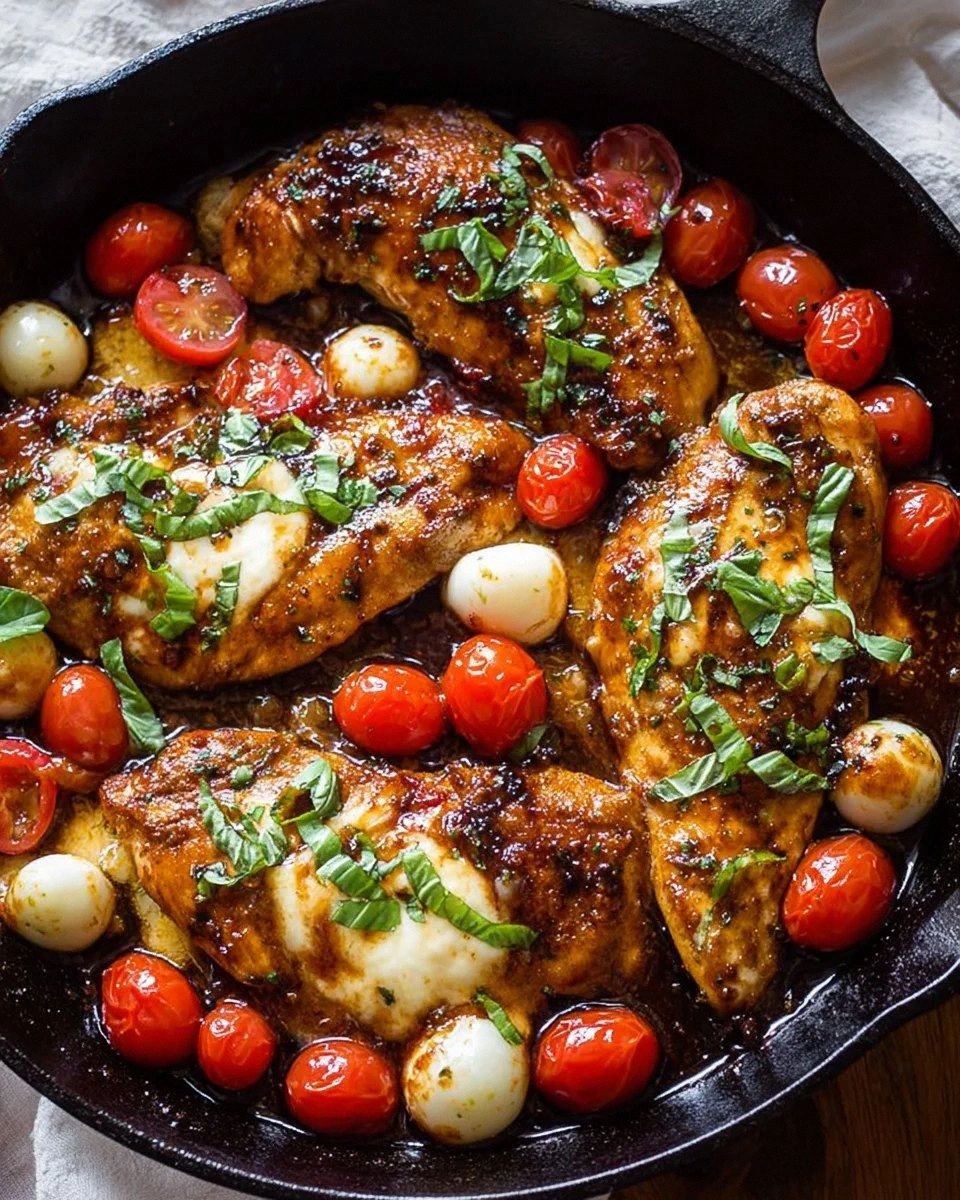
Now return the chicken to the skillet, nestling each piece into the sauce. Toss in the grape tomatoes, letting them mingle with the glaze; they’ll start to soften after about 2 minutes. Sprinkle the fresh mozzarella balls over the top, allowing them to melt into gooey pockets that coat the chicken.
Cover the pan with a tight‑fitting lid and let everything simmer for another 6‑8 minutes. This is the moment of truth: the chicken should reach an internal temperature of 165°F (74°C), and the sauce should cling to the meat like a velvety blanket. If the sauce looks too thick, splash in a tablespoon of water or chicken broth to loosen it without losing flavor.
Once the chicken is cooked through, remove the lid and give the pan a quick stir to coat every bite evenly. Sprinkle the chopped fresh basil over the top, allowing its bright aroma to rise instantly. The basil should stay vibrant green; over‑cooking it would dull its flavor and color.
Transfer the chicken to a serving platter, spoon the remaining sauce, tomatoes, and melted mozzarella over each piece, and finish with a final drizzle of olive oil if you like extra richness. Let the dish rest for 3‑4 minutes; this short rest lets the juices redistribute, keeping every bite moist.
Serve hot, paired with a simple side like roasted asparagus or a crisp green salad. Picture yourself pulling this out of the pan, the whole kitchen smelling incredible, and everyone reaching for seconds before the first bite even settles.
That's it — you did it. But hold on, I've got a few more tricks that'll take this to another level...
Insider Tricks for Flawless Results
The Temperature Rule Nobody Follows
Never start with a cold pan; preheat your skillet for at least two minutes before adding oil. A properly heated surface creates an instant sear, locking in juices and preventing the chicken from steaming. I once tried a “cold‑pan” method and ended up with rubbery meat—lesson learned.
Why Your Nose Knows Best
Trust the aroma cues. When the garlic turns golden and the balsamic starts to caramelize, you’ll smell a sweet‑tart perfume that signals the glaze is ready. If you can’t detect that scent, give the sauce another minute; the flavors need that slight caramelization to reach peak depth.
The 5‑Minute Rest That Changes Everything
After the pan finishes cooking, let the chicken rest uncovered for five minutes. This short pause allows the fibers to relax, keeping the meat tender and juicy. Skipping this step is the fastest way to end up with dry chicken, especially if you slice it too early.
Layered Flavor Build‑Up
Add the basil at the very end, not earlier. Heat destroys its volatile oils, turning the fresh, peppery bite into a muted green flavor. By sprinkling it just before serving, you preserve its bright, aromatic punch that lifts the whole dish.
Sauce Rescue Technique
If your glaze becomes too thick, rescue it with a splash of cold water or low‑sodium broth while whisking vigorously. This re‑emulsifies the sauce, bringing back that silky texture without diluting the flavor. A friend once over‑reduced the sauce and ended up with a sticky, almost caramel candy—this trick saved the day.
Creative Twists and Variations
This recipe is a playground. Here are some of my favorite ways to switch things up:
Spicy Sriracha Kick
Swap half the honey for sriracha and add a pinch of red pepper flakes. The heat cuts through the sweetness, delivering a bold, tongue‑tingling experience that’s perfect for spice lovers.
Mediterranean Veggie Medley
Replace the chicken with thick slices of eggplant and zucchini, and add kalamata olives. The veggies soak up the balsamic glaze, creating a hearty vegetarian main that still delivers that signature tang.
Herb‑Infused Goat Cheese
Swap mozzarella for crumbled goat cheese and stir in fresh thyme. The tangy goat cheese adds a creamy, slightly earthy note that pairs beautifully with the sweet‑tart sauce.
Maple‑Balsamic Glaze
Replace honey with pure maple syrup and add a splash of apple cider vinegar for extra depth. This variation leans into a more autumnal flavor profile, perfect for cozy evenings.
Crispy Panko Topping
After the mozzarella melts, sprinkle a handful of toasted panko breadcrumbs mixed with a drizzle of olive oil. The result is a satisfying crunch that adds texture contrast to the silky sauce.
Storing and Bringing It Back to Life
Fridge Storage
Allow the dish to cool to room temperature, then transfer it to an airtight container. It will keep for up to 3 days in the refrigerator. When reheating, add a splash of water or broth and cover the pan to steam the chicken back to juiciness.
Freezer Friendly
Portion the cooked chicken, sauce, and tomatoes into freezer‑safe bags or containers. Freeze for up to 2 months. Thaw overnight in the fridge, then reheat gently on the stove, again adding a bit of liquid to revive the glaze.
Best Reheating Method
For the crispiest results, reheat in a pre‑heated oven at 350°F (175°C) for 10‑12 minutes, uncovered. This restores the caramelized edges while keeping the interior tender. Microwaving works in a pinch, but you’ll lose the beautiful crust.